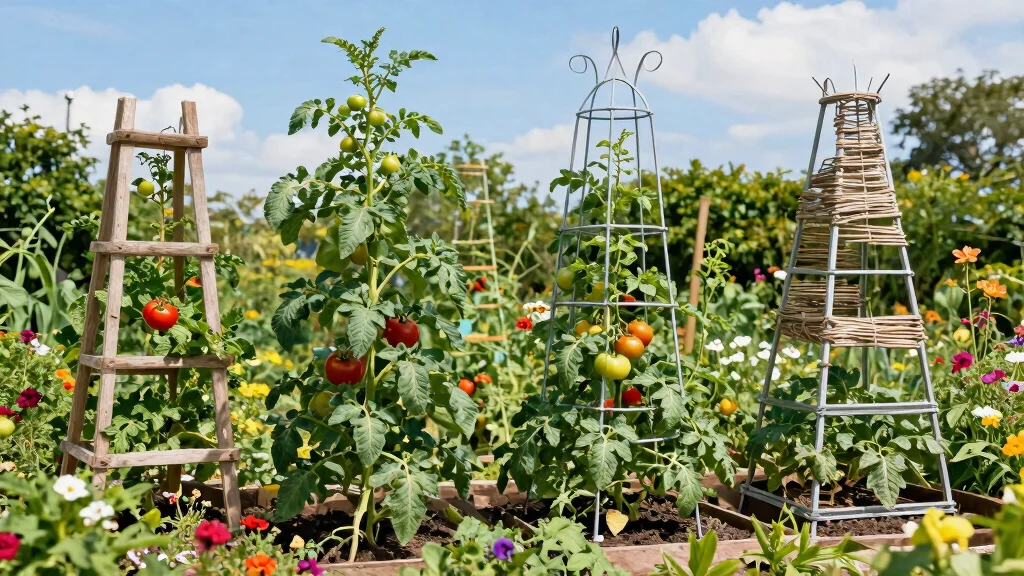
Growing tomatoes can be one of the most rewarding experiences in gardening, and there’s nothing like biting into a vine-ripened tomato fresh from your own backyard. This post is inspired by the desire to help you achieve those juicy yields by sharing creative and sturdy tomato trellis ideas. The right trellis not only supports your plants but also maximizes your garden’s vertical space, allowing for healthier growth and more abundant harvests.
If you’re a gardener looking to elevate your game, whether you’re working with a small balcony or a spacious backyard, this guide is just what you need. You’ll find practical solutions tailored for everyone, from beginners to seasoned green thumbs. Each trellis idea aims to inspire your own DIY projects while keeping your tomatoes healthy and easy to maintain.
You’ll walk away with a treasure trove of 14 inventive tomato trellis ideas that are not only sturdy but also aesthetically pleasing. Each option offers unique benefits, encouraging you to experiment and find the best fit for your gardening style. Get ready to elevate your tomato-growing experience and watch your garden thrive!
Key Takeaways
– Discover 14 innovative tomato trellis ideas that help support your plants while maximizing available space.
– Learn about various materials and designs, including DIY options, to suit your gardening needs and budget.
– Understand how each trellis system enhances air circulation, light exposure, and overall yield for healthier tomato plants.
– Find inspiration for using repurposed items and organic materials, promoting sustainability in your gardening practices.
– Explore practical tips for maintaining your tomato plants, ensuring a productive and rewarding gardening experience.
1. Classic A-Frame Trellis
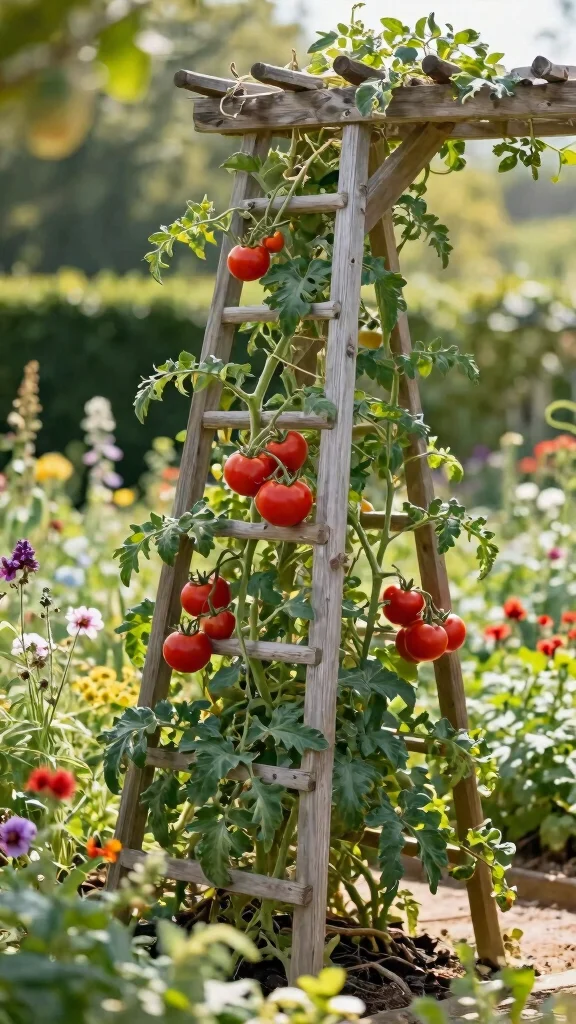
Craving a reliable way to support your tomato plants? The classic A-frame trellis is an ideal solution. Its sturdy design not only provides exceptional support but also allows for easy access when it’s time to harvest your juicy tomatoes. Constructed from durable wood or metal, this trellis can hold up even the heaviest vines without any hassle.
Using an A-frame trellis optimizes vertical gardening space and adds an attractive focal point to your garden. It’s perfect for maximizing sunlight exposure while keeping your plants off the ground, reducing the risk of rot.
For building, opt for treated lumber or robust metal rods for longevity. Space the crossbars 12 to 18 inches apart to give your tomatoes room to climb. Secure the base firmly in the ground for added stability!
For a fun twist, paint your A-frame in cheerful pastel shades to brighten up your garden while supporting your plants.
2. Vertical Grid Trellis
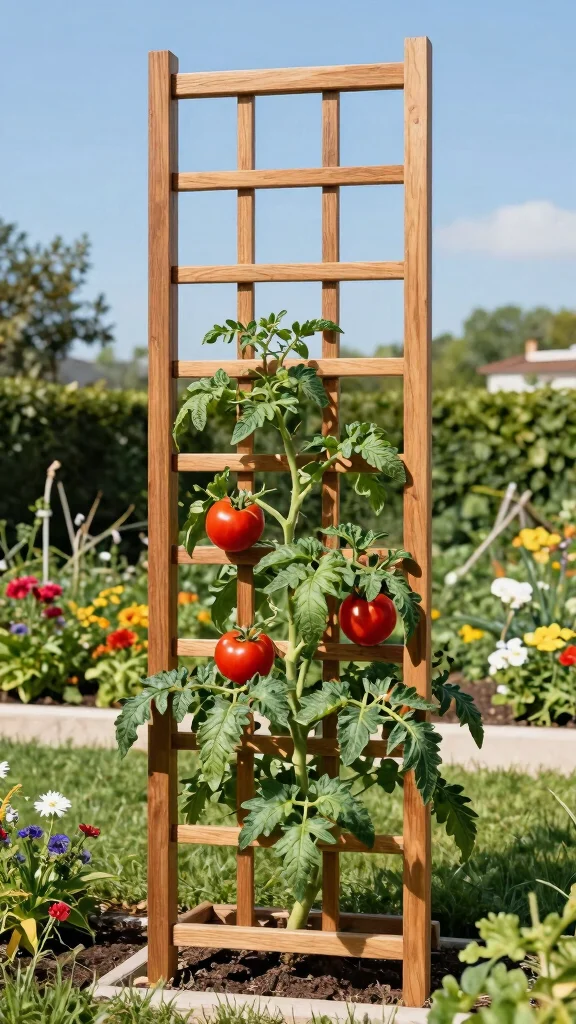
Are you looking to give your garden a modern flair? The vertical grid trellis is a fantastic choice for those wanting a sleek, contemporary look. This lattice-like design supports your tomato plants while ensuring they receive plenty of light and air circulation.
The grid layout maximizes your garden space, making it especially useful in small areas like patios. Plus, it looks stylish and organized, enhancing your garden’s overall appeal.
To create this trellis, use wooden or metal slats to form a grid. Make sure the squares are large enough for the tomato stems to pass through but small enough to provide substantial support. Attach the trellis to a wall, fence, or create a freestanding frame.
Consider growing climbing varieties of tomatoes, like ‘Indeterminate’ types, for the best results with this setup.
Key Trade-offs & Our Top Pick
Classic A-Frame Trellis
– Pros: It’s sturdy and supports heavy plants well. It’s also easy to build and doesn’t require much space.
– Cons: It may take up ground space, which could limit planting options below. It’s also less suitable for very tall tomato varieties.
– Best for: Gardeners with limited space who want reliable support for medium-sized tomato plants.
Vertical Grid Trellis
– Pros: This design maximizes vertical gardening, allowing for more plants in a smaller area. It’s easy to assemble and can support multiple plants at once.
– Cons: It can be more challenging to build, often requiring more materials and tools. Some plants may struggle to find support if spaced too far apart.
– Best for: Urban gardeners seeking space-efficient solutions for high yields.
Tomato Cage with a Twist
– Pros: Unique designs offer enhanced stability and can easily be moved as needed. They are usually quite affordable and easy to find at garden centers.
– Cons: Standard cages can tip over in strong winds, and not all are adjustable for taller plants. Some designs may not provide sufficient support for heavy fruit.
– Best for: Beginners looking for a simple, low-cost solution that can be adjusted as they gain experience.
Bamboo Pole Trellis
– Pros: Bamboo is lightweight and eco-friendly, making it easy to install and relocate. It’s also very affordable and offers good height for taller tomato plants.
– Cons: Bamboo can rot if not treated properly, and it may not last as long as metal or plastic options. It can also be less stable in windy conditions.
– Best for: Gardeners who prefer natural materials and are willing to replace their trellis every few seasons.
Repurposed Ladders
– Pros: Using old ladders is a creative way to recycle materials. They add a rustic look to your garden and are very sturdy.
– Cons: They can take up more space than traditional trellises and may be heavy, making them hard to move. The height may not be adjustable for different tomato varieties.
– Best for: Eco-conscious gardeners who love DIY projects and have the space for unique designs.
Expert Recommendation:
Best Overall: Vertical Grid Trellis
The Vertical Grid Trellis stands out as the best overall option for most gardeners. It offers great value for money by maximizing space and increasing yields. Its versatility means it can adapt to various tomato types, making it a long-lasting investment for both novice and experienced gardeners. The ease of assembly and support for multiple plants makes it a top choice for those looking to get the most out of their vertical gardening efforts.
Why We Picked This:
While the Vertical Grid Trellis is a fantastic choice, you might prefer the Classic A-Frame if space is tight or if you want a quick build. If you’re into DIY, the Repurposed Ladders can add charm to your garden. Each option has its unique benefits, so consider your gardening style and needs before you decide!
3. Tomato Cage with a Twist

Looking for a quick and effective way to support your tomatoes? Transform the traditional tomato cage by wrapping it with string or wire mesh! This simple upgrade offers your plants better support as they grow heavy with fruit.
This method is budget-friendly and straightforward, giving your plants the sturdy foundation they need. Plus, it’s a practical solution for those who want to keep things simple while still being effective.
Enhance your setup by stacking multiple cages for taller plants or create a multi-tiered cage by joining several together. You can even wrap a layer of burlap around the mesh for a rustic touch that complements your garden.
Make sure the cages are anchored deep in the soil to prevent tipping, especially when your tomatoes start to weigh down the supports.
4. Trellis Wall Planter
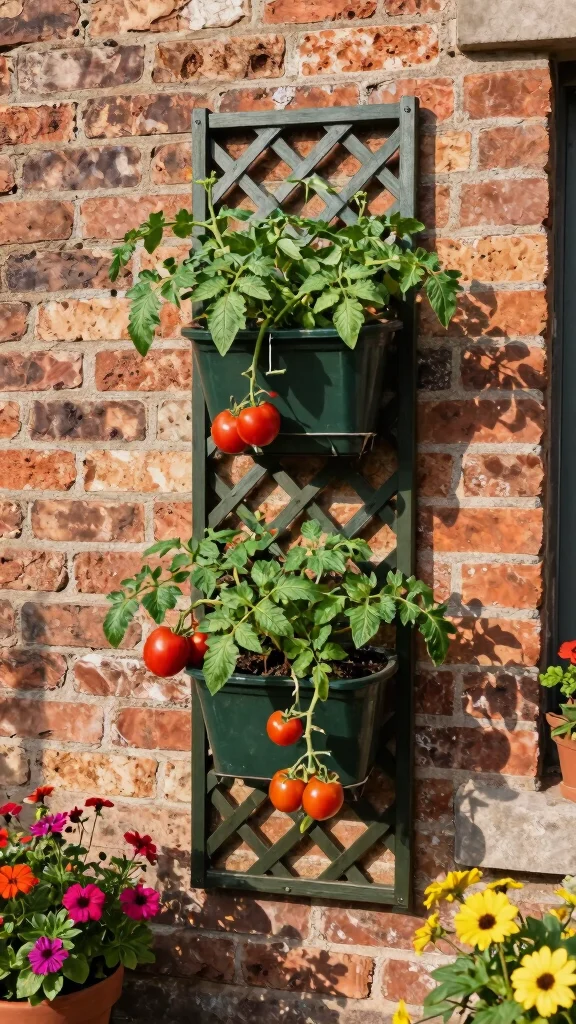
Short on gardening space? A trellis wall planter might be just what you need. This clever design allows you to grow tomatoes vertically against a wall, making the most of your available space.
Not only does it save ground space, but it also turns an ordinary wall into a vibrant green backdrop, making harvesting a breeze. Plus, it adds an appealing visual element to your garden.
To build, securely attach a sturdy trellis to your chosen wall. Use pots or planters that can be hung or mounted, ensuring they have good drainage for healthy tomatoes.
Opt for dwarf or determinate tomato varieties in wall planters, as they require less support and are easier to manage.
5. Bamboo Pole Trellis
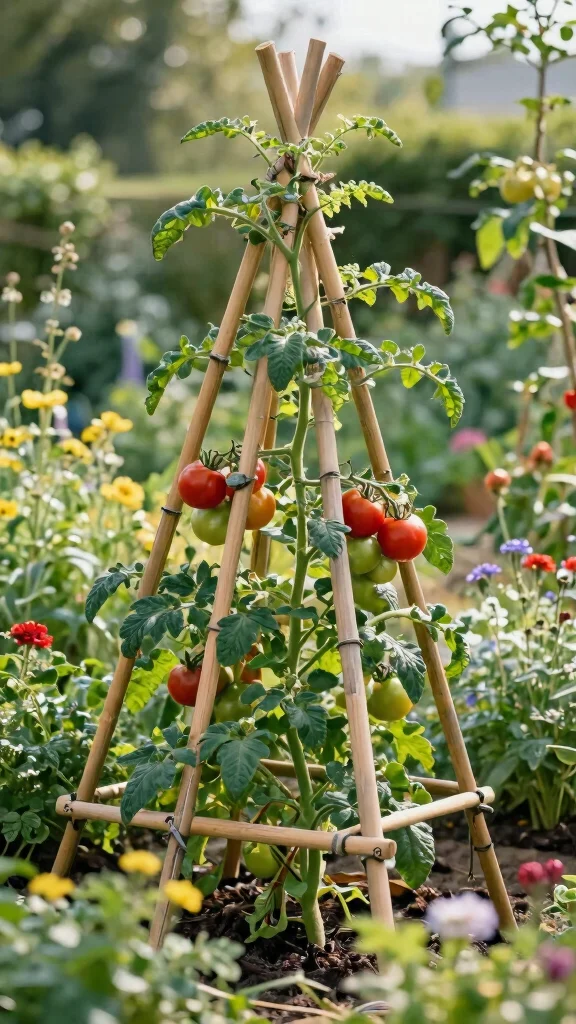
If you appreciate a natural aesthetic, consider using bamboo poles for your tomato trellis. This eco-friendly solution is perfect for those who love a rustic vibe in their gardens.
Bamboo is both lightweight and strong, making it an excellent choice for supporting heavy tomato plants while blending seamlessly with your garden’s natural environment.
To create your trellis, set up several bamboo poles in a triangle or square configuration, based on your available space. Secure the tops together with twine or wire and attach horizontal strands for your plants to climb.
For a sustainable approach, harvest bamboo from local sources or your own garden to reduce costs and promote eco-friendliness.
6. String and Wire Trellis
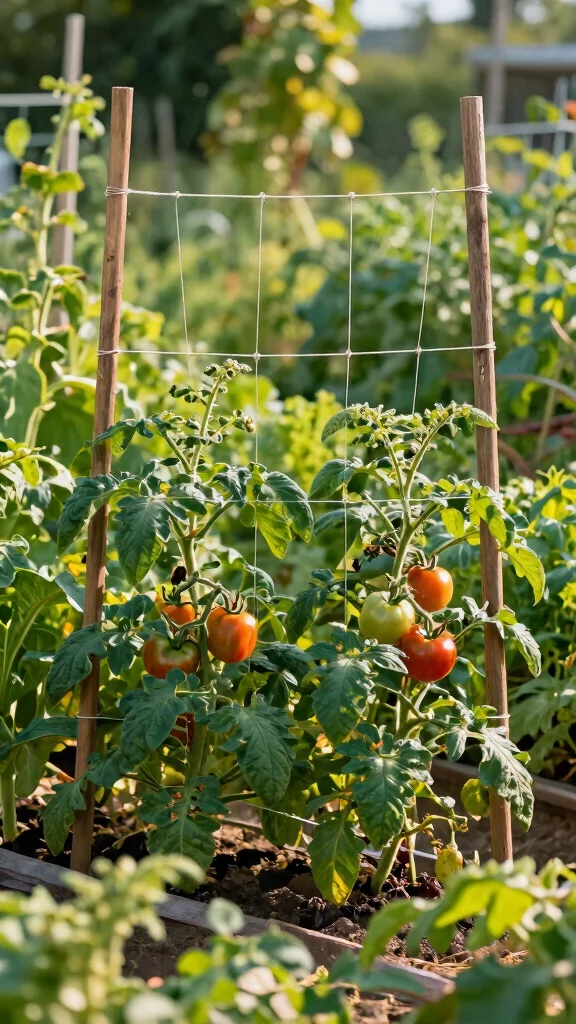
Seeking an affordable and simple DIY option? Look no further than a string and wire trellis! This design is easy to set up and can be tailored to fit any size garden.
This trellis allows for excellent airflow and light exposure, both vital for thriving tomato plants. It’s also a practical solution for gardeners on a budget.
To build, attach two vertical stakes at either end of your garden bed. Then, string wire or twine horizontally between them at intervals that match your plants’ height. As your tomatoes grow, gently tie them to the strings for support.
This method works wonderfully for indeterminate tomato varieties, as you can easily adjust the strings as your plants continue to climb throughout the season.
7. Obelisk Trellis
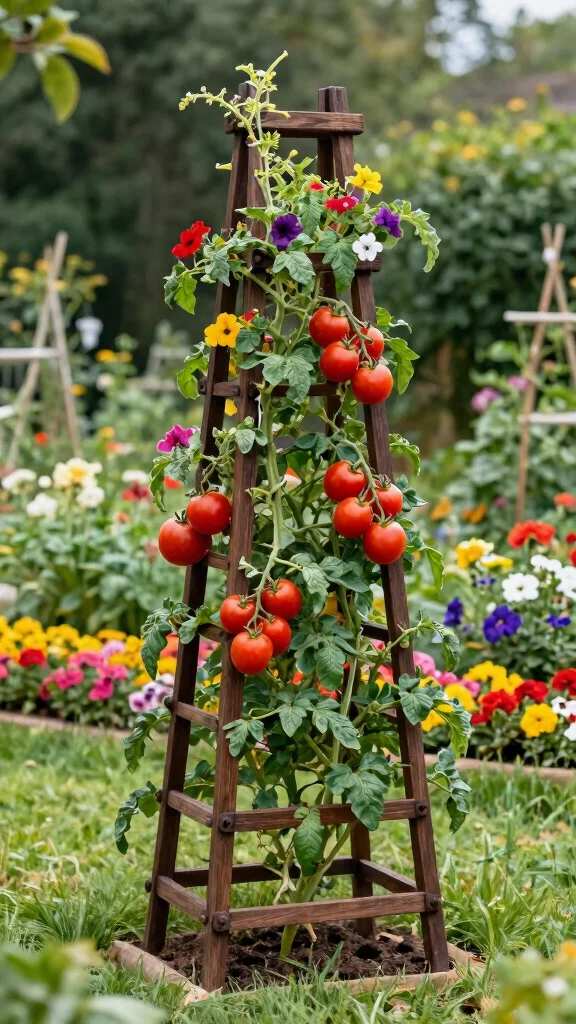
Want to add a touch of elegance to your garden? Consider an obelisk trellis! This stylish structure serves as both a functional support for your tomatoes and a decorative centerpiece for your outdoor space.
The obelisk design not only provides solid support for your plants but also creates a striking vertical focal point, enhancing your garden’s beauty while ensuring your tomatoes receive ample sunlight and air circulation.
To build, create a pyramid shape using wooden boards or metal rods, securing each corner to ensure stability. Many gardeners enjoy painting or staining their obelisks to match their garden’s decor.
Use this trellis for both tomatoes and climbing flowers, like sweet peas or cucumbers, to create a stunning and productive display.
8. Fencing as Trellis
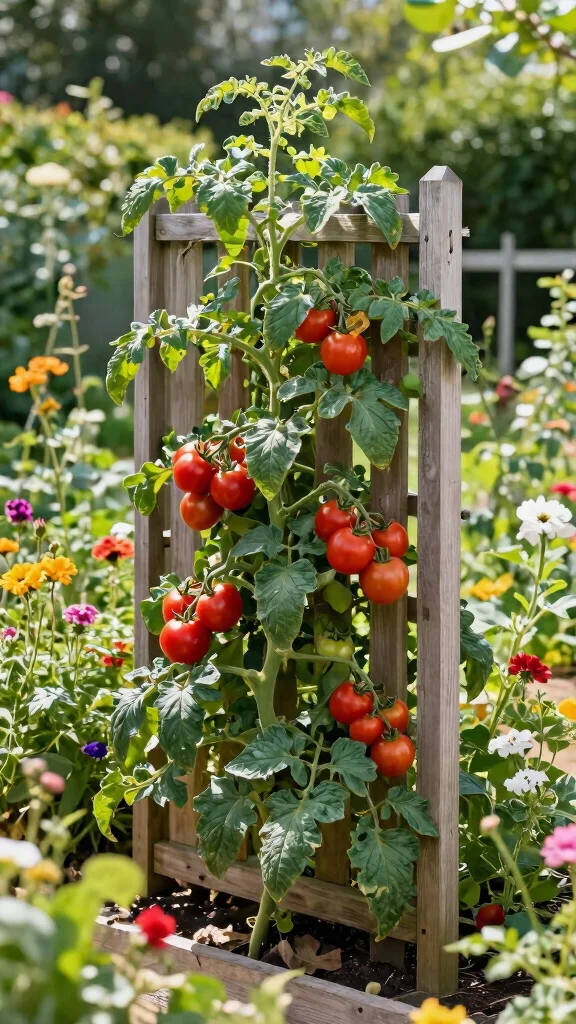
Do you have an existing fence? Consider using it as a trellis for your tomatoes! This practical approach not only saves you money but also maximizes your planting space.
Utilizing a fence as a support system provides your tomatoes with a solid anchor to grow upward, reducing the chance of rot and disease.
To maximize this setup, use clips, strings, or ties to attach your tomato plants to the fencing. This method allows you to guide their growth without causing damage to the plants.
This technique works particularly well for indeterminate varieties, creating a personalized garden space that’s both functional and attractive.
Your fence can do more than divide a yard—it’s a ready-made tomato trellis. Save money, maximize space, and keep plants thriving by clipping and tying them to sturdy rails as they climb.
9. Repurposed Ladders
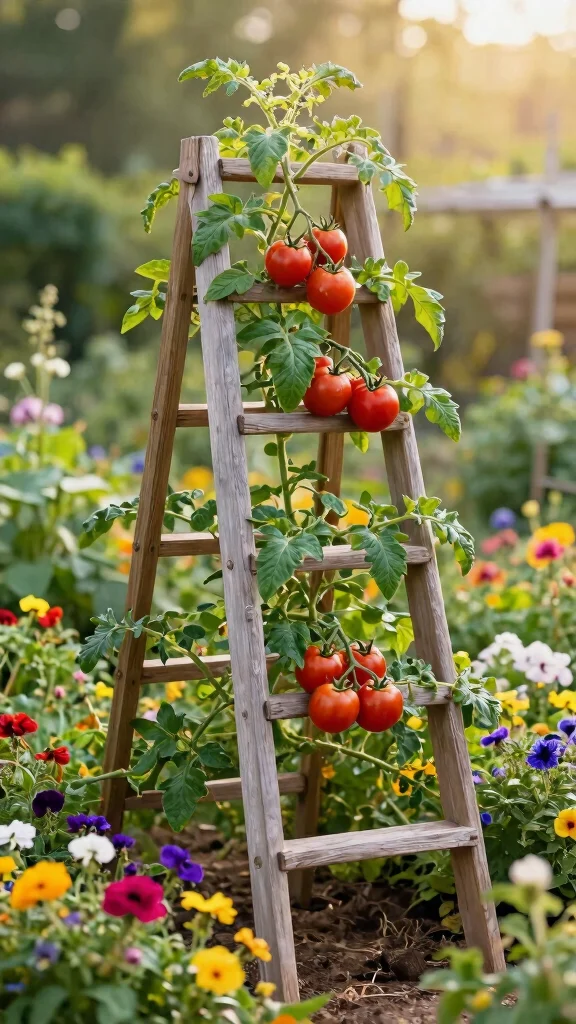
Transform an old ladder into a quirky tomato trellis! This creative upcycling project adds a unique charm to your garden while providing the necessary support for your plants.
Using a ladder not only supports your tomatoes but also injects character into your garden. It’s a cost-effective solution for repurposing items you may no longer need.
To create your trellis, lean the ladder against a wall or fence and secure it for stability. Use twine or garden clips to attach tomato plants to the rungs as they grow.
Consider painting a wooden ladder in bright colors to serve as a focal point, especially when surrounded by flowering plants and other garden decorations.
10. Channeling Vertical Space
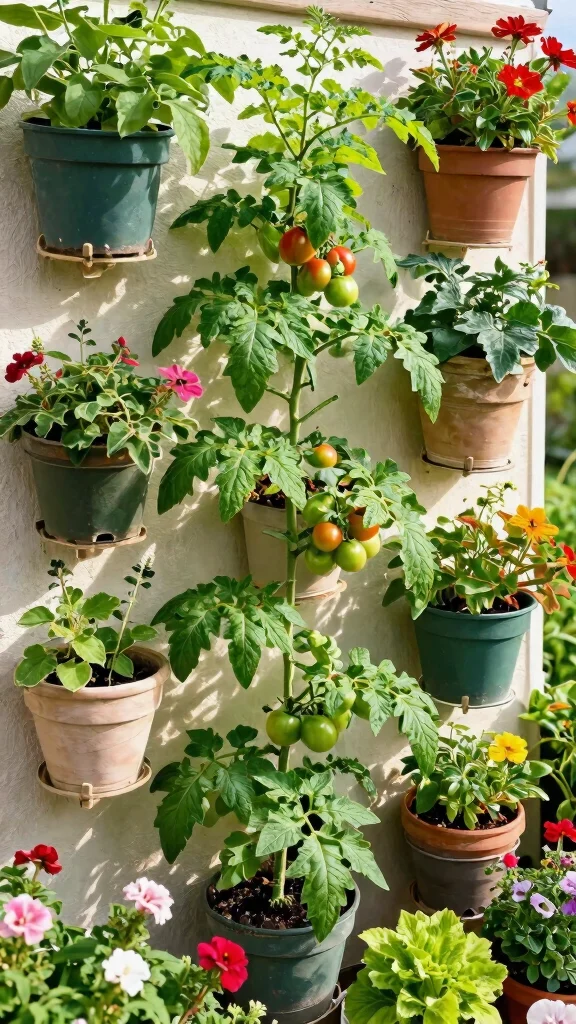
Maximizing garden yields often means channeling vertical space effectively. Utilizing walls, fences, and even pergolas allows you to fit more plants into a smaller area.
This strategy enhances air circulation and sunlight exposure, ultimately boosting your tomato yield. It’s an efficient way to make the most of your gardening efforts.
To implement this concept, create vertical growing pockets on existing structures using pots, planters, or hanging baskets. Make sure these are easily accessible for watering and harvesting.
Mix in companion plants like basil or marigold to promote tomato health and enhance the overall aesthetics of your garden.
11. Cucumber Trellis for Tomatoes

Did you know cucumbers and tomatoes can thrive together? Using a cucumber trellis for your tomatoes offers unique benefits, allowing your plants to grow higher and remain off the ground.
This dual-purpose trellis not only supports your tomatoes but also helps save space and reduces disease risk by keeping plants elevated and healthy.
To build, create a sturdy frame with vertical supports and horizontal bars, ensuring the crossbars are spaced appropriately for your tomato plants to climb.
Plant companion herbs like basil or dill nearby to enhance flavor and deter pests, creating a harmonious garden environment.
12. Paracord Support System
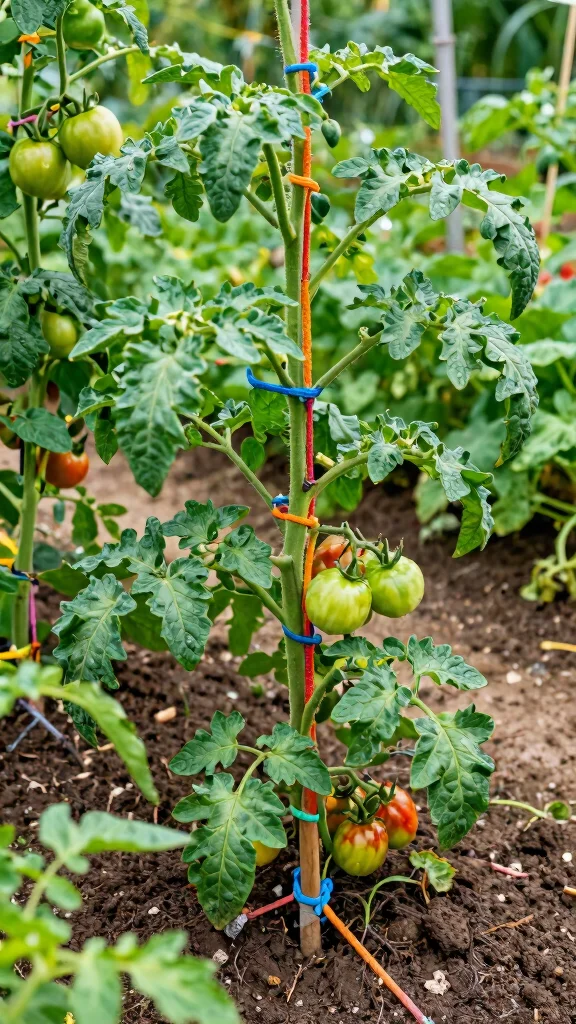
Looking for a lightweight and flexible support option? A paracord system is a fantastic choice! This innovative method allows your tomato plants to climb easily while providing solid support.
Paracord is strong yet lightweight, making it perfect for supporting your growing tomatoes without adding unnecessary weight to your garden.
To set up, attach a sturdy anchor at the top of your garden area, then run paracord down to the soil where your plants are rooted. As your tomatoes grow, gently tie them to the paracord for stability.
Try using different colored paracord for a fun and visually appealing design that turns your support system into a unique decorative feature.
Fun fact: a single strand of 550-paracord can handle about 550 pounds. That’s more than enough to support your tomato trellis with a simple paracord system. Quick tip: anchor high, run cord down to the roots, and let the vines climb.
13. Wire Mesh Trellis
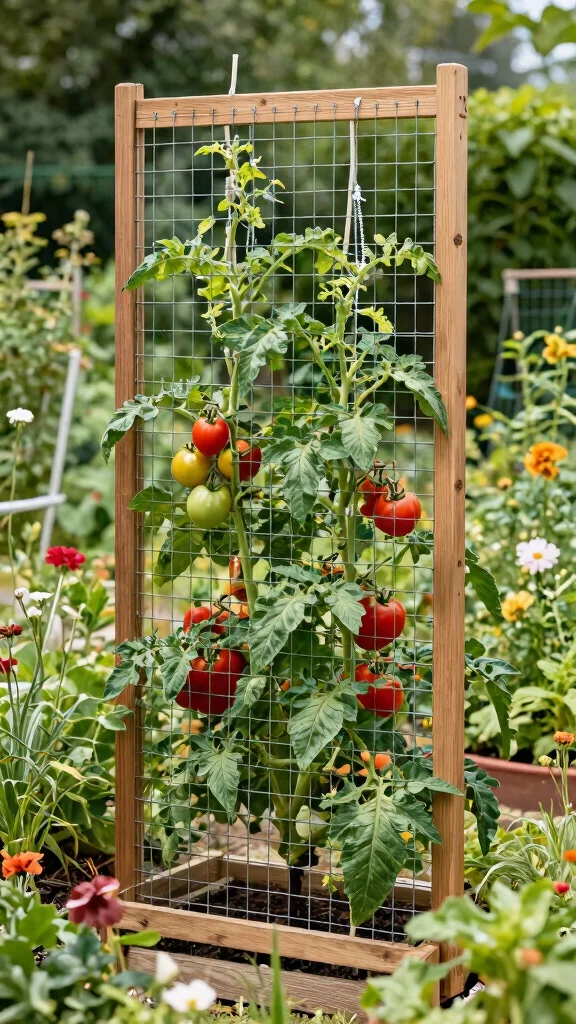
Wire mesh makes an excellent trellis for tomatoes, providing stability while allowing flexibility for growth. This versatile option promotes excellent air circulation, which is essential for healthy tomato plants.
Durable wire mesh can hold even the heaviest tomato varieties without collapsing and is simple to install and customize to fit any garden size.
To create, attach wire mesh to a wooden or metal frame, ensuring it’s firmly planted in the ground. As your tomato plants grow, guide them along the mesh for optimal support.
Choosing rust-resistant mesh ensures longevity, keeping your trellis effective for many growing seasons.
14. Tiered Tomato Stand
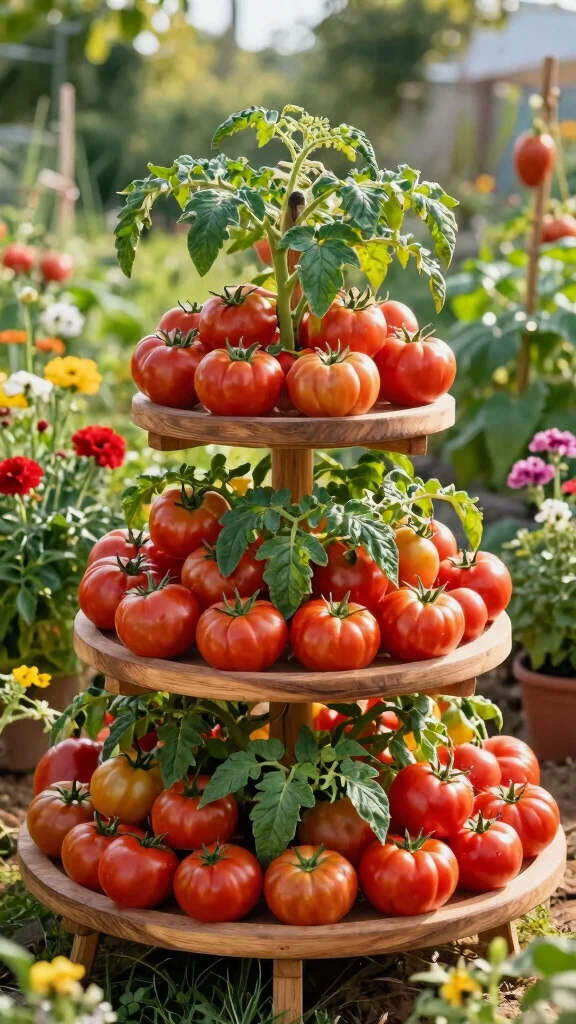
For an eye-catching display that maximizes yield, consider a tiered tomato stand! This multi-level structure allows you to grow various tomato varieties while keeping them organized and off the ground.
A tiered stand not only saves space but also simplifies harvesting, allowing you to easily pick fruits from the upper tiers without difficulty.
To build, use sturdy wood to create a multi-level platform, ensuring each layer has enough space for growth. Adding wheels can enhance mobility, or ensure a secure base for stability.
Position your stand in a sunny area of your garden to guarantee all plants receive equal light, promoting healthy growth across all levels.
A tiered tomato stand is a practical tomato trellis solution for a small garden—no bending over to pick fruit. Pro tip: place taller varieties on top and rotate weekly to balance sun and airflow.
Conclusion
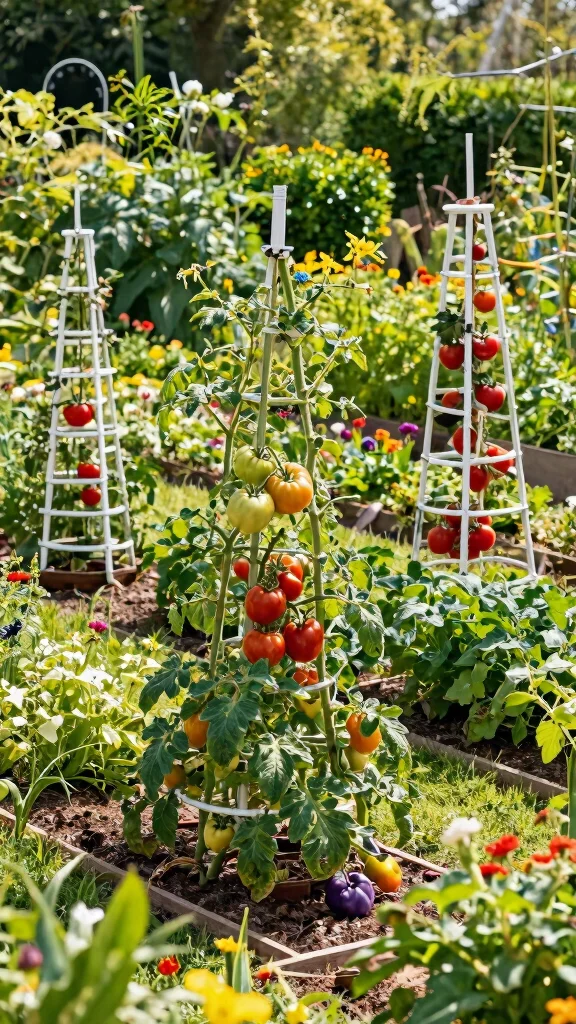
With these 14 tomato trellis ideas, your garden can flourish like never before! Each trellis design not only supports your plants but also adds aesthetic value to your outdoor space. Whether you choose a classic structure or a creative DIY solution, remember that the right support system can lead to bountiful yields. Use this list as inspiration to create your best garden yet, and who knows? You might find the next perfect design that reflects your gardening style!
Happy gardening, and may your tomato plants thrive!
Note: We aim to provide accurate product links, but some may occasionally expire or become unavailable. If this happens, please search directly on Amazon for the product or a suitable alternative.
This post contains Amazon affiliate links, meaning we may earn a small commission if you purchase through our links, at no extra cost to you.
Frequently Asked Questions
What are the best tomato trellis designs for maximizing yield in vertical gardening?
Here are popular tomato trellis designs that boost yield in vertical gardening setups: a tall lattice DIY trellis designs, a sturdy cattle panel trellis, and a simple stake and twine system. For maximizing tomato yield, choose a design tall enough to support heavy fruit and with open spacing for airflow. How to set up: secure the base firmly in your raised bed gardening area, train the main stem to the structure as plants grow, and use soft ties every 8-12 inches. Prune to 1-2 main stems on indeterminate varieties and check ties regularly to prevent damage. This keeps your tomato support systems sturdy and productive.
How do I install a tomato trellis in a raised bed without damaging roots?
Plan your layout and choose a design that fits your space. Install the trellis before transplanting or early after so you can work around roots. Anchor it to bed edges or use sturdy posts sunk into the soil. Use soft plant ties or velcro strips to attach stems; avoid twisting around thick roots and leave space for root growth and watering. Regularly check and adjust as plants grow to keep the system tomato trellis safe and effective in raised bed gardening.
What materials work best for a durable tomato trellis in a garden?
Durable options include rot resistant cedar or redwood for wooden frames, powder coated steel or stainless hardware for strength, and galvanized wire or cattle panels for a sturdy grid. A tomato trellis built with steel supports handles heavy indeterminate varieties, while wood is nice for raised beds. Avoid untreated wood that can rot when in contact with moist soil, and choose weather resistant hardware to keep your tomato support systems lasting season after season.
How can vertical gardening techniques help maximize tomato yield?
Vertical gardening improves sun exposure and air circulation, which reduces disease and boosts yield. Start early by training plants to the trellis, prune to 1-2 main stems for many varieties, and tie stems as they grow to keep them aligned. Water consistently at the base and mulch to retain moisture. With a solid tomato trellis in your raised bed gardening setup, you’ll harvest cleaner fruit and see bigger yields.
What common mistakes should I avoid with tomato support systems?
Avoid common missteps like using flimsy stakes or ties that rub and damage stems, not anchoring the trellis to resist wind, waiting too long to train or prune, letting vines tangle and crowd adjacent plants, and neglecting regular maintenance as plants grow. Also watch for insufficient sun or poor airflow in vertical gardening setups, and don’t ignore the need to adjust ties and height as the tomato trellis supports larger fruit. Learn from these pitfalls to keep your tomato yield consistently high.
Related Topics
tomato trellis
vertical gardening
DIY trellis designs
tomato support systems
raised bed gardening
maximizing yield
beginner friendly
easy gardening
sturdy structures
seasonal gardening
home gardening
sustainable practices