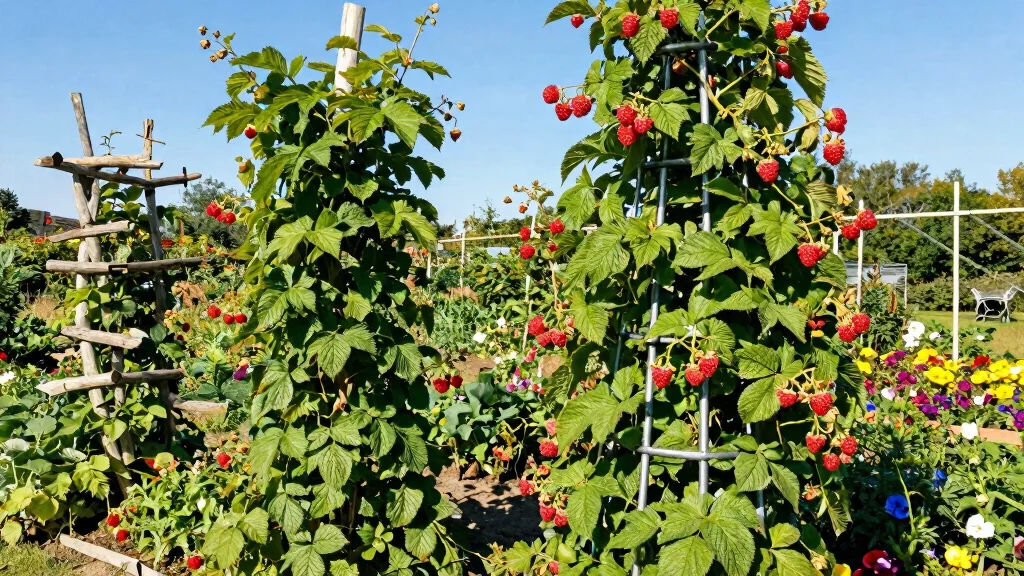
Raspberry season is one of those times that has gardeners buzzing with excitement. There’s something truly special about plucking ripe berries right from the vine. But to get there, you need to think about how to support your raspberry plants effectively. That’s why I’ve crafted this guide on 13 raspberry trellis ideas supported by canes. These ideas aren’t just functional; they’re also a way to add character to your garden space.
If you’re someone who loves gardening, especially when it comes to berry plants, this post is for you. Whether you’re a seasoned gardener or just starting out, finding the right trellis can make all the difference. You’ll find practical solutions that fit your style and space. From classic designs to creative twists, these ideas will help you maximize your raspberry yield while keeping your garden looking neat and beautiful.
In this post, you’ll discover a variety of trellis designs that not only support your plants but also inspire you to think vertically. You’ll learn about different materials and styles, as well as tips for maintaining your berry plants. Get ready to transform your garden into a vertical paradise, where your raspberries will thrive!
Key Takeaways
– Explore a range of creative raspberry trellis ideas that enhance both plant support and garden aesthetics.
– Learn how to implement vertical gardening solutions to maximize space and increase your raspberry yield.
– Discover trellis design inspiration using various materials, including wood, metal, and more.
– Get practical raspberry growing tips that will help you maintain healthy plants and enjoy abundant harvests.
– Find out how to choose the ideal garden support systems tailored to your garden’s layout and your personal style.
1. The Classic A-Frame Trellis
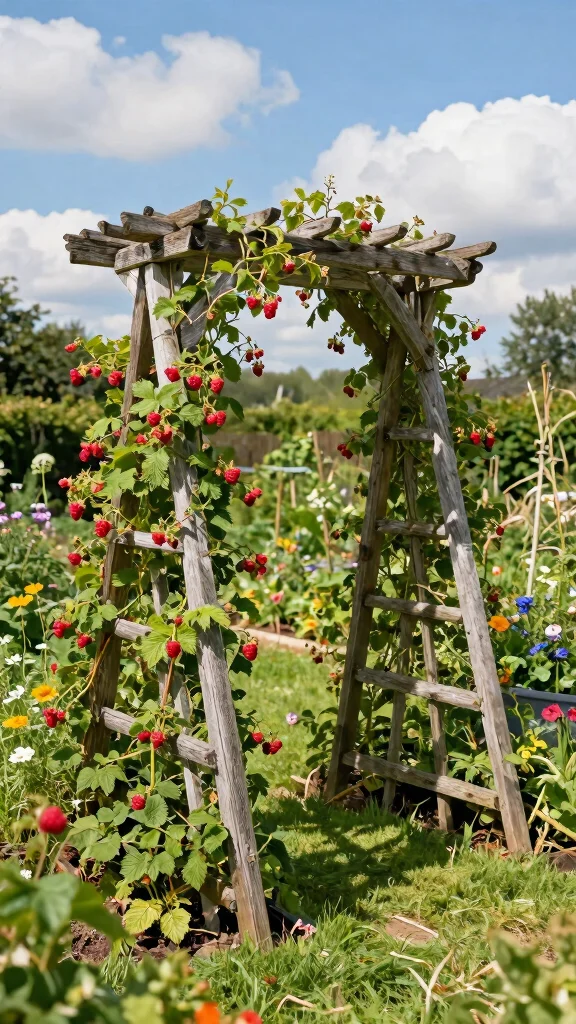
Looking for a practical yet attractive way to support your raspberry canes? The A-frame trellis is a fantastic option that beautifully combines functionality with charm. Made from durable wood or metal, this design not only provides strong support but also allows easy access for harvesting. The open structure promotes airflow, which helps prevent diseases while your plants thrive under the sun.
Setting up an A-frame trellis is simple. Just create two triangular frames and secure them at the top with a horizontal beam. Position your raspberry bushes at the base, and watch them flourish! To keep your plants in peak condition, consider these tips:
– Select a sunny spot with at least 6-8 hours of sunlight.
– Use well-draining, nutrient-rich soil.
– Prune your canes regularly to encourage healthy growth.
This trellis not only elevates your garden’s aesthetic but also makes berry-picking a delightful task.
2. Rustic Ladder Trellis
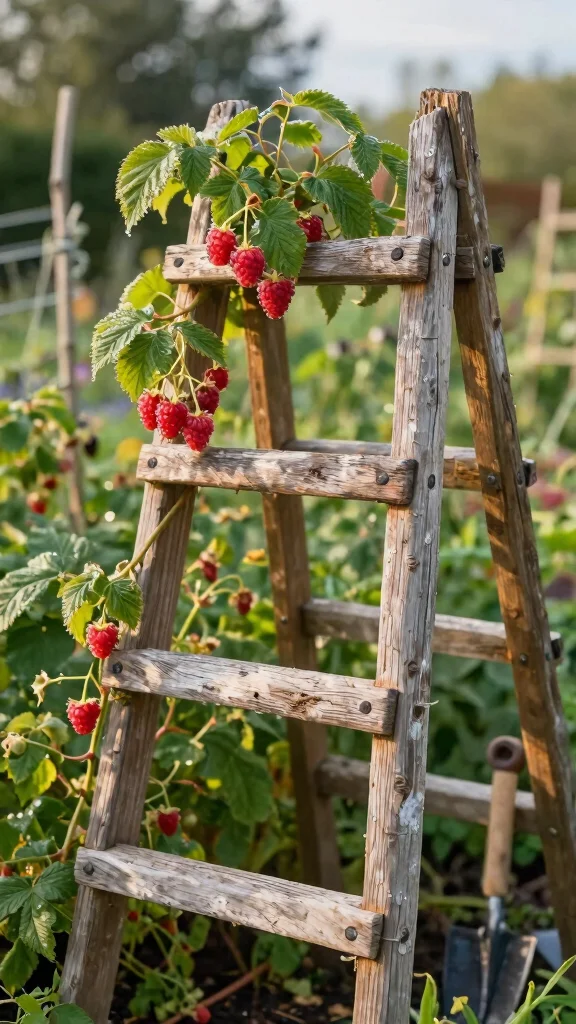
Imagine a rustic ladder trellis adding a touch of farmhouse charm to your garden. This design mimics an old wooden ladder, with each rung perfectly supporting your growing raspberry canes. Crafted from reclaimed wood, it not only enhances visual appeal but also brings character to your garden space.
To create your rustic ladder, either find an old wooden ladder or construct one with wooden boards. Position it vertically, ensuring stability, and weave your raspberry canes through the rungs for optimal support. Here are additional considerations:
– Paint or stain the ladder to complement your garden theme.
– Use it as a backdrop for climbing flowers for added beauty.
This delightful trellis is ideal for gardeners seeking practicality without sacrificing style.
3. Vertical Pipe Trellis
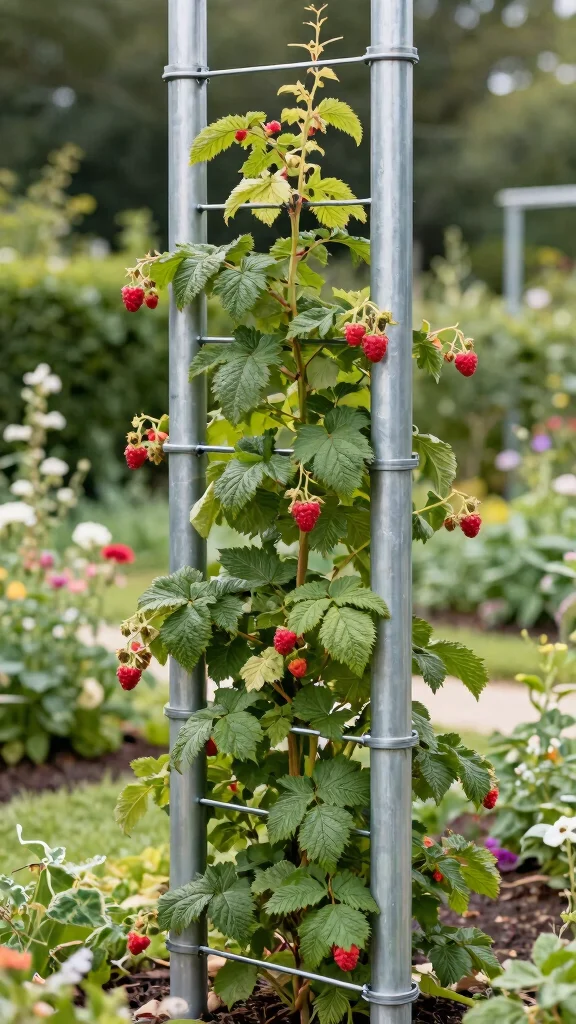
Want a modern touch for your raspberry garden? Consider a vertical pipe trellis! This sleek design uses vertical pipes to support your canes, maximizing vertical space and enhancing mobility within your garden. You can easily create this trellis using materials like PVC or metal pipes.
Simply drive several pipes into the ground at equal distances and attach horizontal wire at different heights. As your raspberry canes grow, tie them to the wire for sturdy support. This method is not only strong but also allows sunlight to reach your plants. Advantages include:
– Perfect for smaller gardens with limited space.
– Durable and weather-resistant for long-lasting use.
– Customizable height to accommodate various raspberry varieties.
This stylish trellis simplifies your berry plant care and makes harvesting a breeze.
4. Arched Trellis for Elegance
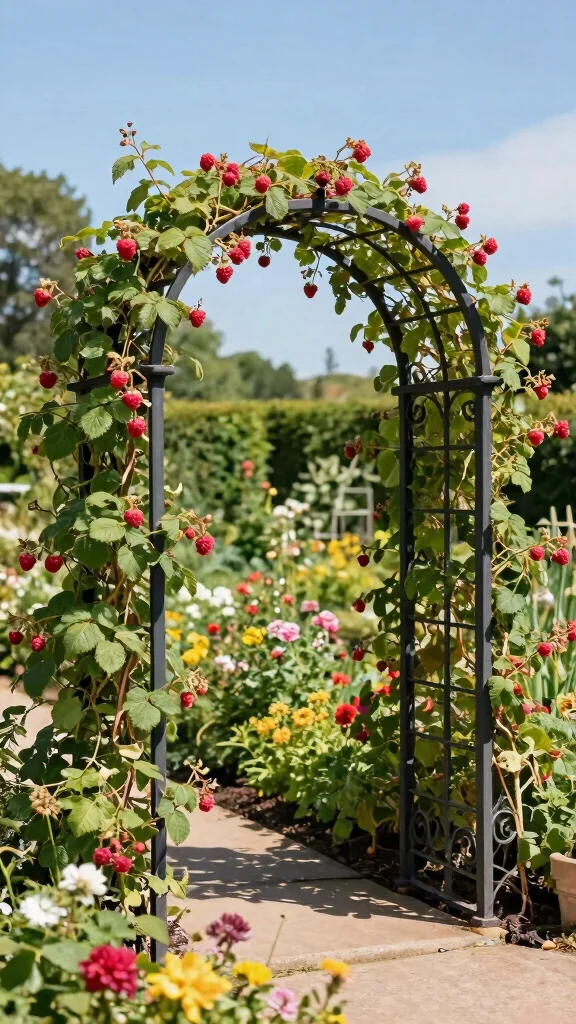
Add a touch of elegance to your garden with an arched trellis. This stunning design not only supports your raspberry canes but also serves as an eye-catching focal point. You can decorate the arch with flowers and greenery, creating a beautiful entrance to your berry garden.
Purchase a pre-made arched trellis or build one from treated wood or metal. Position your raspberry canes at the base and let them elegantly climb the arch. For best results, remember these tips:
– Securely anchor the trellis to withstand wind.
– Plant companion flowers at the base for extra beauty.
– Regularly train your canes on the structure for healthy growth.
This design beautifully combines functionality with aesthetic appeal, making it a great addition to any garden.
Fun fact: An arched raspberry trellis creates 4–6 feet of vertical climbing space, keeping canes off the ground and boosting air flow. With a pre-made arch or DIY frame, you’ll add elegance and make raspberry trellis ideas a centerpiece in minutes.
Key Trade-offs & Our Top Pick
Option 1: The Classic A-Frame Trellis
– Pros:
– Simple to build using wood or metal.
– Provides excellent support for growing raspberry canes.
– Can be moved easily if necessary.
– Cons:
– Requires a bit of space, which may not suit small gardens.
– May need additional bracing for stability in windy areas.
– Best for: Beginners looking for an easy, sturdy option without much complexity.
Option 2: Rustic Ladder Trellis
– Pros:
– Gives an appealing, rustic look to your garden.
– Vertical design maximizes space and light for your berries.
– Can be made from leftover materials like pallets.
– Cons:
– May not hold up well with heavy fruit loads unless reinforced.
– Requires some DIY skills for a stable construction.
– Best for: Gardeners who enjoy a touch of charm and are handy with tools.
Option 3: Vertical Pipe Trellis
– Pros:
– Very durable and can withstand harsh weather.
– Takes minimal ground space, great for urban gardens.
– Easy to install and adjust height as plants grow.
– Cons:
– Can be costlier due to the materials needed.
– Less visually appealing than wooden options.
– Best for: Urban gardeners with limited space who want a long-lasting solution.
Option 4: Simple Wire Trellis
– Pros:
– Inexpensive and easy to set up.
– Allows for optimal airflow around plants, reducing disease risk.
– Can be adjusted easily as plants grow.
– Cons:
– May not support heavy fruit.
– Could rust over time if not properly maintained.
– Best for: Budget-conscious gardeners who want a straightforward and functional trellis.
Option 5: Decorative Fence Trellis
– Pros:
– Provides both support and aesthetic appeal.
– Can serve as a barrier or privacy screen.
– Available in various styles to fit garden themes.
– Cons:
– More expensive than basic trellis options.
– May require professional installation for stability.
– Best for: Gardeners looking to enhance their outdoor space while providing support for raspberries.
Best Overall: The Classic A-Frame Trellis
The Classic A-Frame Trellis stands out as the best choice for most gardeners. It strikes a perfect balance between value and functionality. You can easily build it with materials like wood or metal, making it accessible for beginners. The sturdy design provides excellent support for your raspberry canes, ensuring they grow healthy and strong. Plus, it can be relocated as needed, making it a versatile addition to any garden.
Why We Picked This:
While the A-Frame Trellis is our top recommendation, you might prefer other options based on your unique needs. If you value aesthetics, the Rustic Ladder Trellis can add charm to your garden. For those in tight spaces, the Vertical Pipe Trellis offers durability without compromising on space. Always consider your garden’s layout and your DIY skills when making your final choice.
5. Simple Wire Trellis
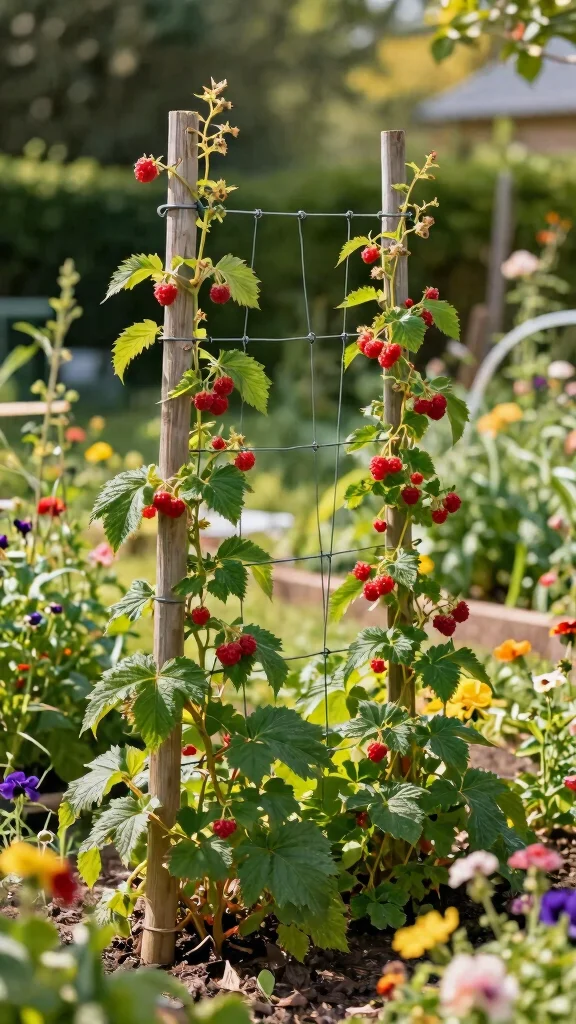
Sometimes, the simplest solutions are the best. A simple wire trellis is an effective, low-maintenance way to support your raspberry canes. This design is incredibly versatile and can be set up quickly with just a few materials. Run horizontal wires between posts to create climbing rows for your canes.
To get started, gather:
– Two sturdy posts (wood or metal)
– Strong garden wire or twine
Position the posts at either end of your raspberry bed, stretching the wire at various heights. As your plants grow, tie them to the wire, keeping the fruit off the ground. Benefits include:
– Quick installation and easy upkeep.
– Adjustable height for different raspberry types.
– Improved airflow to mitigate disease risks.
This trellis style is perfect for anyone seeking a straightforward support solution for their berries.
6. Square Grid Trellis
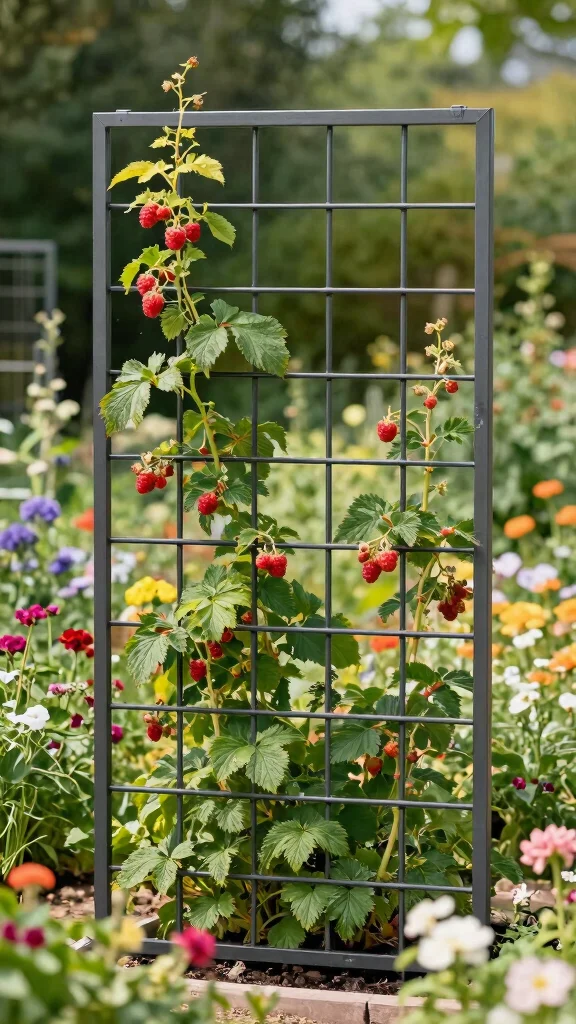
Explore a unique geometric approach with a square grid trellis for your raspberry canes. This design features a grid of wooden or metal squares, providing strong support while ensuring optimal sun exposure and air circulation for your plants.
To build a square grid trellis, start with a basic frame and add crossbars to create a grid pattern. Customize the size of the squares based on the expected growth of your canes. Once constructed, plant your raspberries at the base and train them to climb through the squares. Advantages include:
– A modern aesthetic that fits contemporary gardens.
– Strong support for heavy fruits.
– Easy access for harvesting ripe berries.
This trellis style is ideal for those who want to make a statement while ensuring their raspberries thrive.
7. Fan Trellis for Space Efficiency
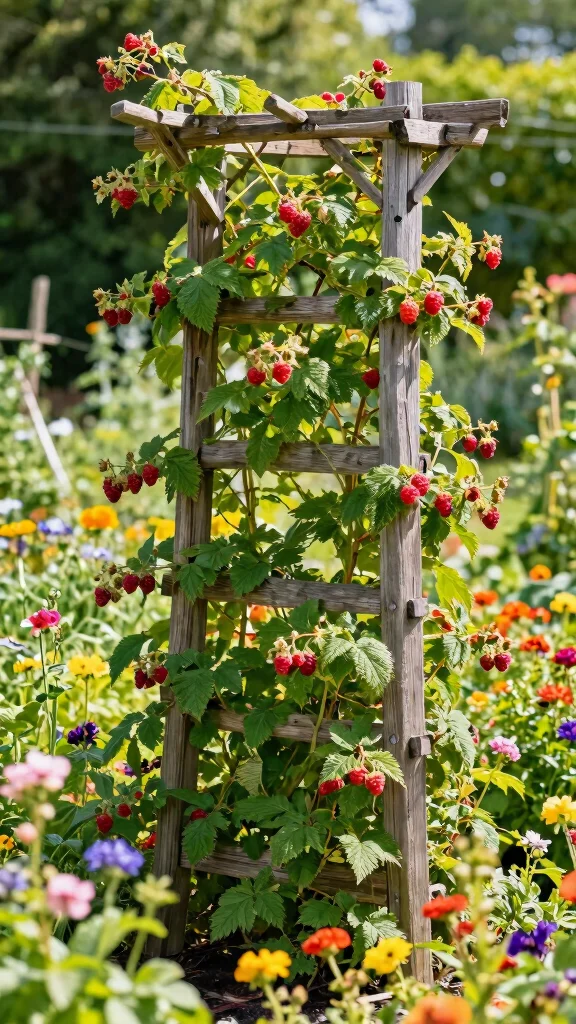
If space is at a premium, the fan trellis design is perfect for you. This structure spreads out like a fan, providing plenty of room for raspberry canes to grow while occupying minimal ground space. It’s great for small gardens or patios where vertical gardening is essential.
To create a fan trellis, anchor a central post in the ground and attach slanted beams radiating outward. Use wood or metal for a sturdy structure. As your canes grow, train them to spread across the fan shape, maximizing sunlight exposure. Tips for this design include:
– Secure anchoring to handle wind pressures.
– Regularly prune canes to maintain shape and health.
– Combine with other vertical plants for a lush effect.
This innovative trellis saves space while creating a captivating visual in your garden.
Fun fact: a fan trellis can reclaim up to 40% of ground space in tight gardens. With this raspberry trellis ideas setup, you can fit more cane growth along a vertical plane and still have easy access for pruning. Train canes to fan outward for tidy, productive rows.
8. Horizontal Beam Trellis
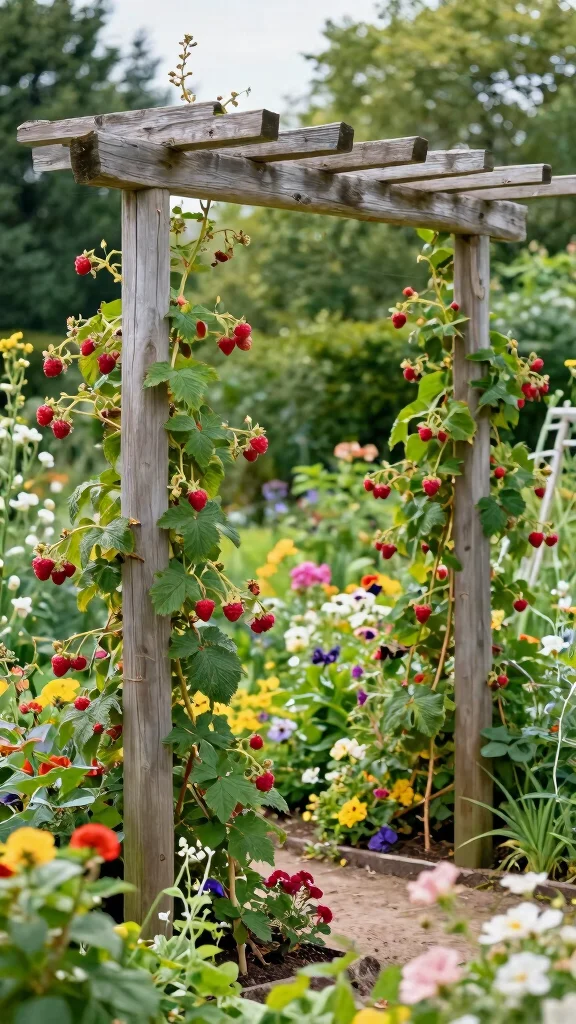
The horizontal beam trellis is a straightforward yet effective way to support your raspberry canes. This design features horizontal beams positioned at different heights, allowing the plants to grow upward while offering consistent support. It’s ideal for gardeners who prefer a tidy look in their vertical gardening.
To create this trellis, place two vertical posts in the ground and connect them with horizontal beams at various intervals. As your canes grow, tie them to the beams for healthy growth, making harvesting simpler. Benefits include:
– Organized raspberry plants for easy management.
– Direct access for maintenance and harvesting.
– Stability in windy conditions due to its solid structure.
This trellis design is perfect for those seeking an uncomplicated solution that enhances their garden’s organization.
9. Container Trellis System
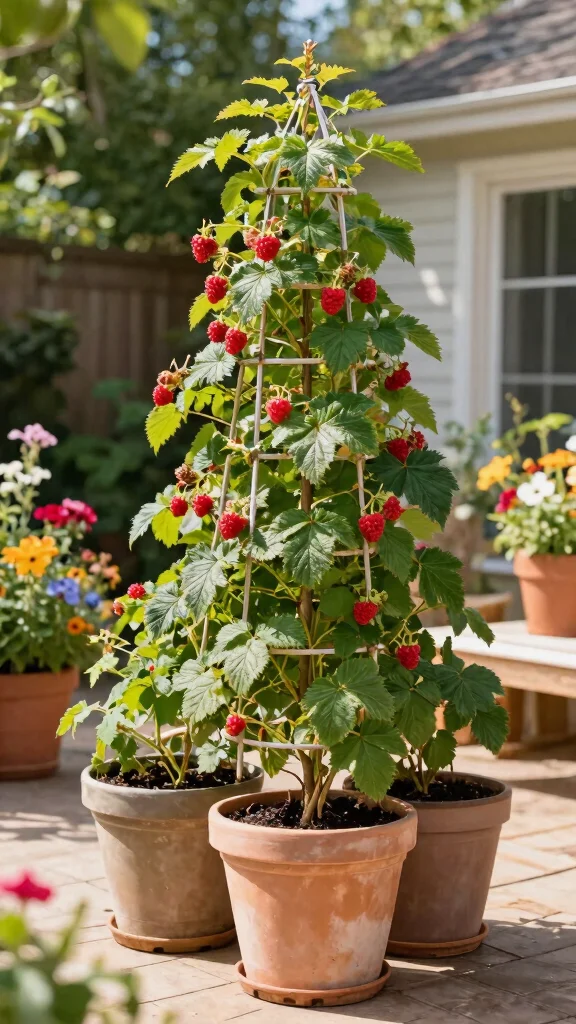
Urban gardeners or those with limited ground space will love a container trellis system. This approach allows you to plant raspberry canes in containers equipped with small trellises for support. It’s a creative way to grow berries while controlling soil quality and plant health.
To set up, choose large containers to provide adequate root space, anchoring a small trellis in each pot. As your canes grow, guide them up the trellis for vertical growth. Key points to keep in mind:
– Use high-quality potting soil for better drainage.
– Water regularly, as container plants dry out quickly.
– Fertilize with slow-release organic options for healthy growth.
This method is perfect for maximizing your gardening potential without needing a large yard.
10. Decorative Fence Trellis
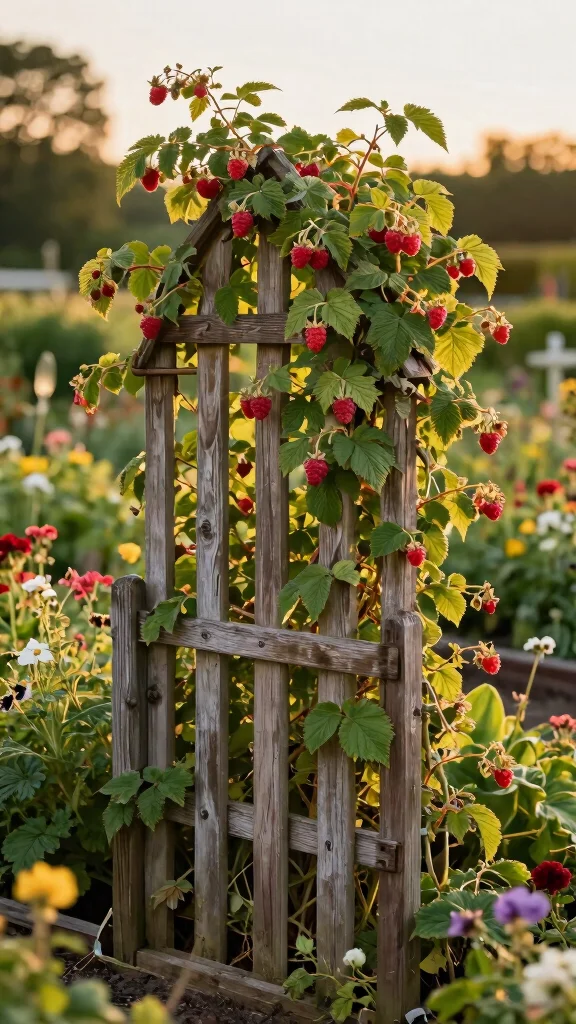
Transform your garden with a decorative fence trellis that enhances beauty while supporting raspberry canes. This design turns a basic fence into a functional trellis, adding charm and character to your outdoor space. It’s a clever way to use existing structures while maximizing vertical growth.
To implement this idea, attach horizontal wires or wooden slats to your fence at various heights. Train your canes to climb along the fence, creating a stunning wall of greenery and fruit. Benefits include:
– A beautiful backdrop for your garden without extra installations.
– Easy maintenance and access for harvesting.
– Increased privacy and aesthetic appeal.
This innovative trellis solution combines utility with visual interest, making it a perfect fit for any garden setting.
11. Vertical Planter Tower
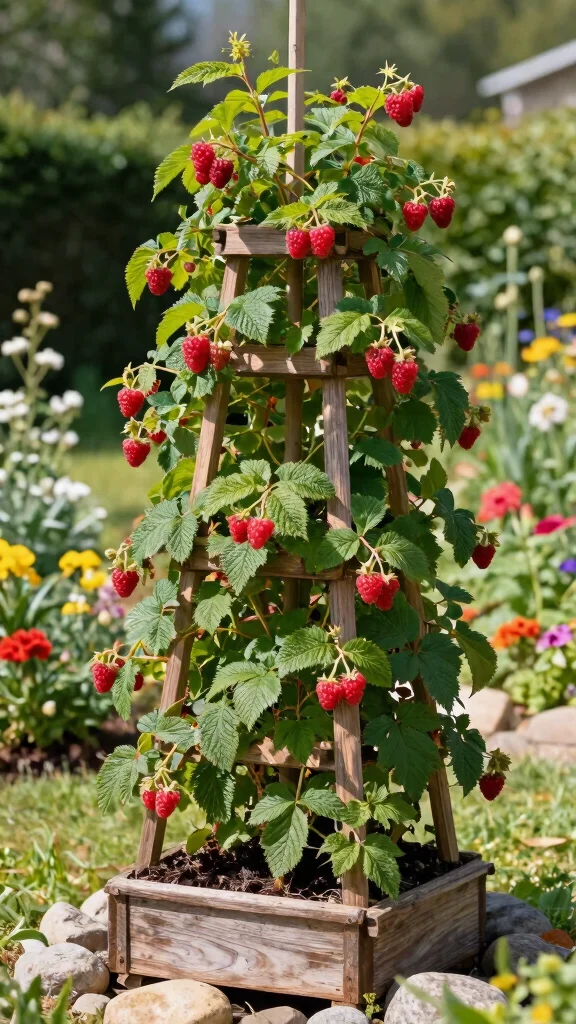
Vertical planter towers are an ingenious way to grow raspberry canes in a compact space while creating a stunning display. These towers consist of stacked layers that maximize vertical gardening opportunities. They save space and simplify watering and maintenance.
To create a vertical planter tower, use wooden pallets or build a custom frame with pots at different levels. Fill them with soil and plant your raspberry canes, encouraging upward growth. Advantages include:
– A striking vertical effect that draws attention.
– Efficient use of space for small gardens.
– Improved drainage and soil quality due to individual pots.
This design is ideal for urban gardeners wanting to maximize limited space without sacrificing style.
12. Grape Arbor Trellis
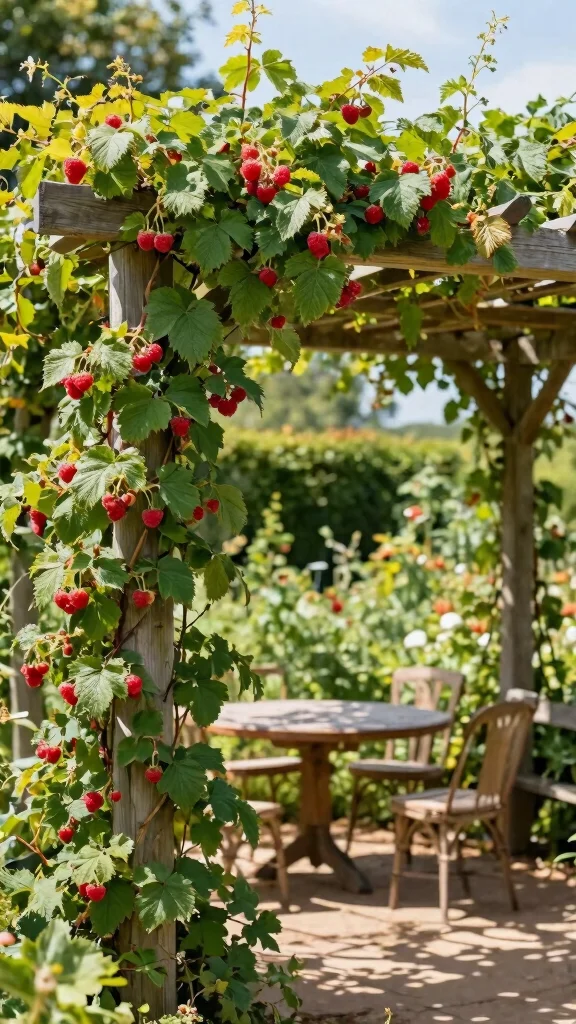
While grape arbors typically support grapevines, they also make excellent support systems for raspberry canes. This large, freestanding structure creates a sturdy frame for your berries while providing shade and aesthetic appeal.
To set up a grape arbor, build a robust framework using wood or metal, ensuring enough height for your raspberry canes. Train them to grow up the supports, creating a lush canopy of berries. Benefits of this design include:
– A unique visual element that enhances your garden’s charm.
– Provides shade and coolness during berry-picking.
– Creates an inviting atmosphere for outdoor gatherings.
This trellis type is perfect for those wanting to combine functionality with a beautiful backyard feature.
13. Multi-Plant Trellis
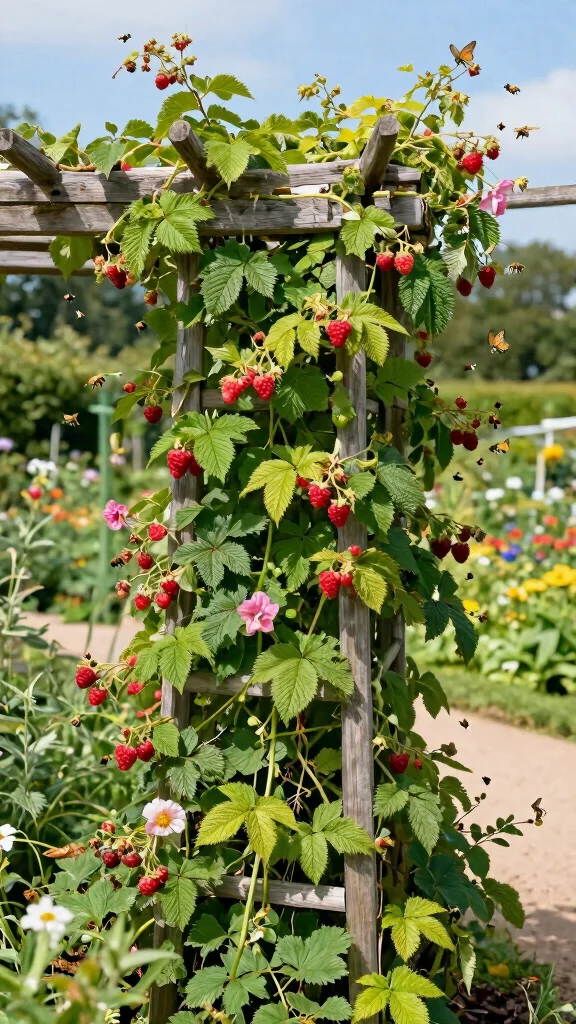
For those who want the ultimate in vertical gardening, a multi-plant trellis is the way to go. This design supports not just raspberries, but also other climbing plants, allowing you to create a rich, biodiverse garden. You can pair your raspberries with companion plants like peas, beans, or even flowers that attract pollinators.
To create a multi-plant trellis, build a large frame or use a standard trellis within a garden bed. As your raspberry canes grow, let them intertwine with other plants for a vibrant ecosystem. Tips include:
– Select companion plants with similar light and water needs.
– Regularly check for pests that may affect multiple species.
– Embrace the beauty of a diverse garden.
This trellis design is perfect for gardeners wanting to maximize biodiversity while enjoying a bountiful raspberry harvest.
Fun fact: raspberry trellis ideas using a multi-plant frame can double harvest space—raspberries share the trellis with peas or beans and attract pollinators. Build a large frame, let canes entwine, and watch your vertical garden thrive.
Conclusion
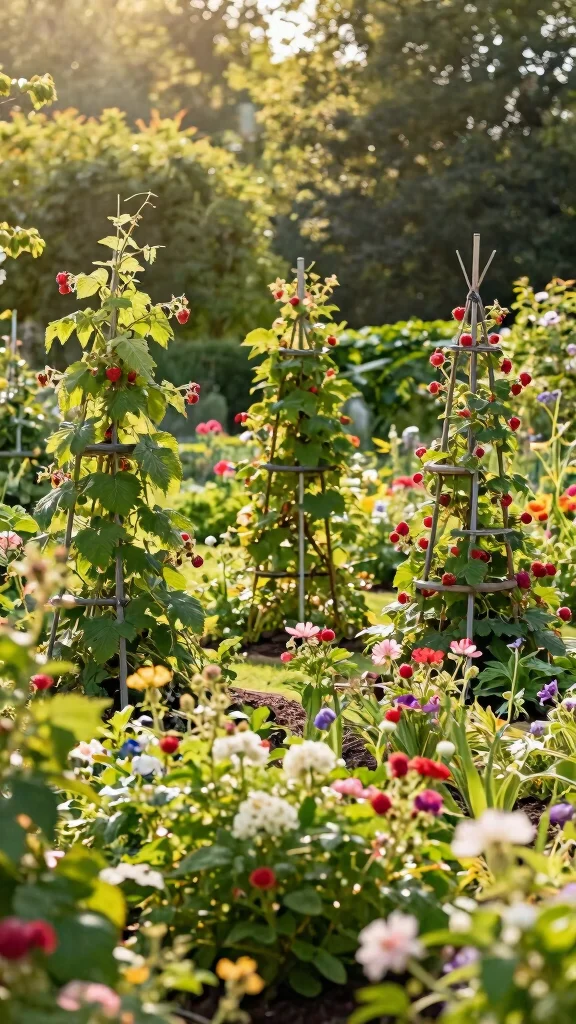
Choosing the right trellis for your raspberry canes can significantly enhance growth and make harvesting easier. Each of these 13 trellis ideas offers unique styles and advantages, from rustic designs to modern structures. Embrace these options to not only support your plants but to beautify your garden space. Whether you have a spacious yard or a compact patio, there’s a trellis idea here for everyone looking to cultivate delicious berries. Happy gardening!
Note: We aim to provide accurate product links, but some may occasionally expire or become unavailable. If this happens, please search directly on Amazon for the product or a suitable alternative.
This post contains Amazon affiliate links, meaning we may earn a small commission if you purchase through our links, at no extra cost to you.
Frequently Asked Questions
What are the best raspberry trellis ideas for maximizing space in a small garden?
For compact spots, consider a few raspberry trellis ideas that lift canes off the ground.
Options include a simple two-wire post-and-wire setup, a T‑trellis with a cross arm, a compact cattle-panel arch, or an espalier along a fence.
Choose sun, space posts about 3–4 feet apart, aim for a 4–6 foot height, and install wires at about 18–24 inches and 36 inches. Use soft ties to secure new canes and keep air circulation good for berry plant care and easy harvest.
How can I design and install a sturdy trellis for raspberries with common materials?
This trellis design inspiration uses readily available materials and simple steps.
Materials: wooden posts, galvanized wire or heavy-duty cable, eye screws, staples, wire cutters, and soft plant ties.
Steps: plan height and spacing, set posts 6–8 feet apart along the row, attach a top rail if you want extra support, run two wires at about 18–24 inches and again at 36 inches, tighten with turnbuckles, and train canes to the wires. This setup doubles as a reliable garden support system for vigorous raspberry canes.
What are practical raspberry growing tips to keep canes healthy and productive on a trellis?
Here are practical raspberry growing tips that keep canes healthy and productive.
Plant in full sun with well-drained soil (pH ~5.5–6.5). Water deeply with a drip system and mulch to conserve moisture. Fertilize in early spring with a balanced mix, then again after heavy fruiting. Prune: remove weak canes and older wood, keep strong fruiting canes, and tip-prune to encourage new growth. Regularly inspect for pests and disease and remove affected canes to protect overall berry plant care.
Which vertical gardening solutions work best for raspberry canes and how do I train them?
Great vertical gardening solutions include a two-wire or three-wire trellis, a sturdy stake-and-tie approach, or a lightweight wire-mesh setup.
Training steps: identify primocanes (new growth) and floricanes (fruiting canes); tie primocanes to the lower wire as they grow, then train them upward to the higher wire. Prune out floricanes after fruiting to encourage next year’s fruiting canes. Consistent training improves light exposure and makes harvests easier, aligning with practical vertical gardening solutions for raspberries.
How does using a trellis affect berry plant care, harvest ease, and overall yield?
A trellis boosts berry plant care and yields in several ways. It improves air circulation and sun exposure, reducing disease pressure and fruit rot. Canes stay off the ground, making harvest quicker and reducing fruit damage. A well-designed garden support systems setup also minimizes cane breakage during storms or heavy fruiting, often translating to cleaner picks and potentially higher yields with less effort.
Related Topics
raspberry trellis ideas
vertical gardening
garden support systems
berry plant care
trellis design inspiration
beginner friendly
easy gardening
organic gardening
DIY trellis
space-saving gardening
fruit gardening tips
sustainable gardening