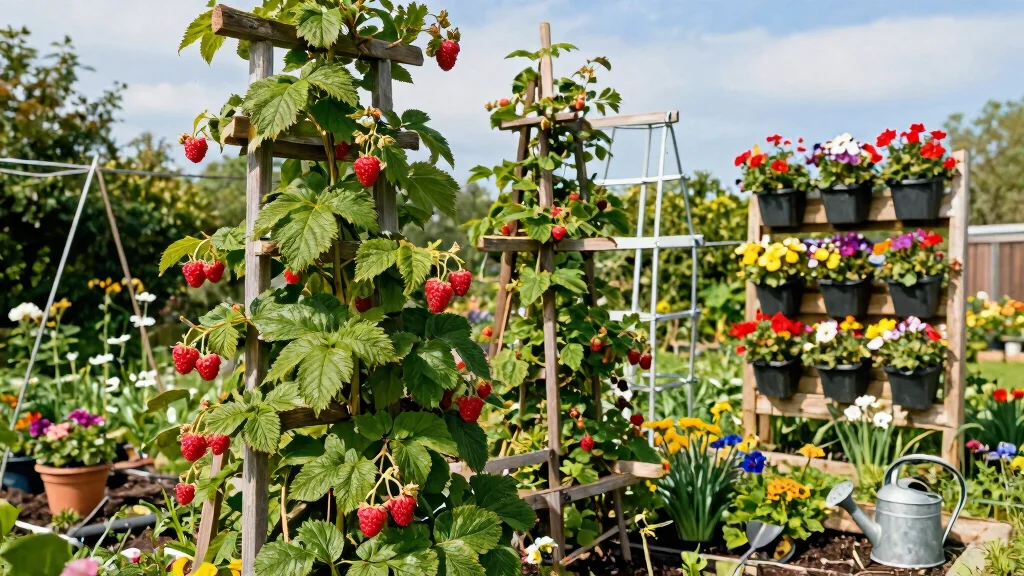
Creating a beautiful raspberry garden can feel like a dream, especially when space is tight. If you’ve been thinking about growing delicious raspberries but are unsure how to do it without cluttering your yard, you’re in the right spot. This post was designed to inspire and guide you with a collection of creative raspberry trellis ideas. These vertical gardening solutions not only maximize your space but also keep your plants healthy and productive.
If you love gardening and want to take care of your berry plants in a smart way, this post is just for you. Whether you’re a seasoned gardener or a curious beginner, the ideas shared here will help you support your raspberry bushes effectively. You’ll find that each trellis design has its unique charm, making your garden not only functional but visually appealing.
In this guide, I’ve rounded up 11 innovative raspberry trellis ideas that are perfect for small gardens. Each suggestion is practical, easy to implement, and brings a little flair to your outdoor space. Get ready to explore some stylish trellis options that will help your raspberry plants thrive while making the most of your garden area.
Key Takeaways
– Variety of Designs: You’ll discover 11 different trellis ideas that cater to various aesthetics and gardening styles, ensuring that there’s something for everyone.
– Space-Saving Solutions: Each trellis design maximizes vertical space, making it easier to grow raspberries in smaller gardens without sacrificing beauty.
– DIY Opportunities: Many of the trellis options are easy to create yourself, offering a fun and cost-effective way to personalize your garden.
– Support for Your Plants: Proper trellising helps your raspberry bushes grow upright, improving air circulation and making harvesting easier.
– Enhancing Garden Beauty: Beyond functionality, these trellises can add visual interest and elegance to your garden, turning it into a delightful sanctuary.
1. Classic Wooden Trellis
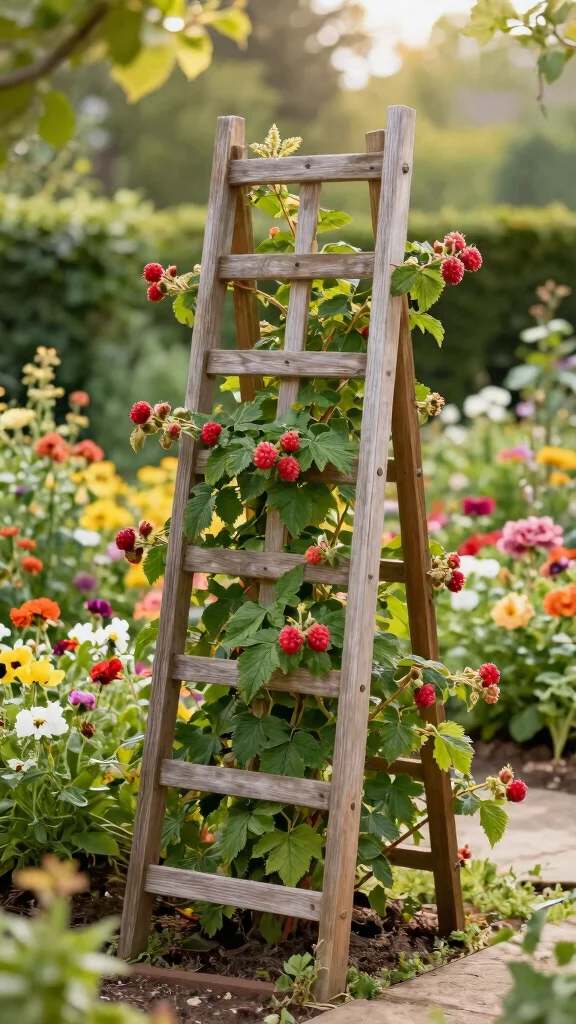
Do you want a charming addition to your garden? A classic wooden trellis could be just what you need. This timeless structure not only supports your raspberry plants but also adds a rustic touch to your outdoor space.
Made from treated lumber or cedar, wooden trellises are durable and customizable. You can paint or stain them to match your style, ensuring they blend seamlessly with the rest of your garden. Keep the design lightweight and airy to allow sunlight to filter through for healthy growth.
Tips:
– Use untreated wood for organic gardening.
– Space your trellis about 3 feet from any walls or fences for good airflow.
– Use twine or garden clips to train the raspberry canes upward.
This classic design enhances not only the growth of your plants but also the beauty of your garden.
2. Vertical Wire Trellis
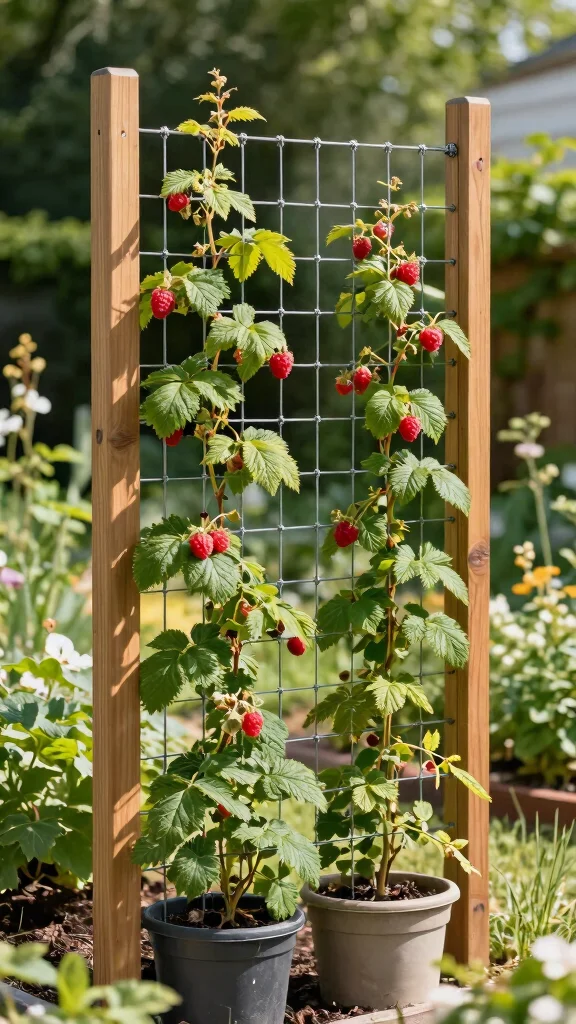
Looking for a sleek and modern solution for your raspberries? A vertical wire trellis is an excellent choice. By using sturdy wire strung between posts, this design allows your plants to grow upward in a tidy, space-saving manner.
Adjusting the height of the wire as your plants grow ensures they get plenty of sunlight and air circulation. Plus, this budget-friendly option can be made even more stylish with colorful wires or galvanized steel.
Tips:
– Ensure the posts are securely anchored in the ground.
– Space the wires about 6 inches apart to optimize growth.
– Regularly prune your raspberry plants to maintain structure and prevent overcrowding.
This trellis not only maximizes your growing space but also adds a chic touch to your garden.
3. Recycled Pallet Trellis
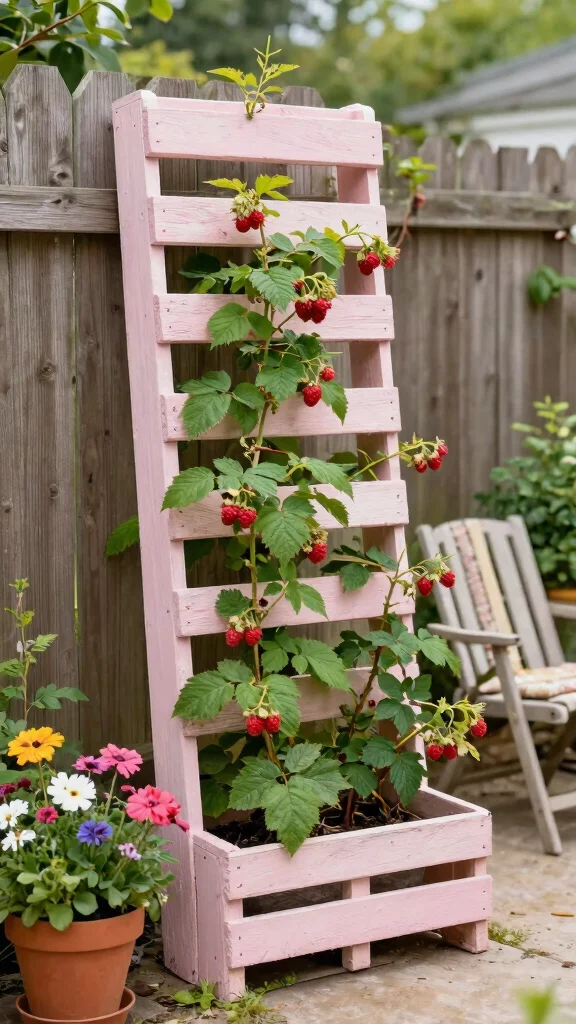
Want to add a unique flair to your garden while being eco-friendly? A recycled pallet trellis is a fantastic DIY project that showcases your creativity. Pallets are often free or low-cost, making them an affordable option for creating a rustic trellis.
Simply stand a pallet upright and secure it to a fence or wall. You can leave it natural for a rustic vibe or paint it to match your garden’s color scheme. This design offers ample surfaces for raspberries to cling to and thrive.
Tips:
– Ensure the pallet is clean and free from harmful chemicals.
– Secure the pallet at the base to prevent tipping.
– Train your raspberry vines using garden twine or clips.
This trellis idea is perfect for small spaces, adding both functionality and creativity to your gardening setup.
Difficulty Rating & Requirements
Overall Difficulty Rating: Medium
Creating a raspberry trellis can be fairly straightforward, making it suitable for both novice and experienced gardeners. While some designs may require specific skills or tools, many options are accessible even to those with limited gardening experience. If you’re ready to get your hands dirty and learn as you go, this project is a great fit for you!
Time Estimate:
⏱ Estimated time: 2-5 hours, depending on the complexity of the design you choose.
– Planning and gathering materials: 1-2 hours
– Building the trellis: 1-3 hours, based on your design and skill level
– Planting the raspberries and securing them to the trellis: 1 hour
Skill Requirements:
– Required skills: Basic woodworking, measuring, and planting skills.
– Beginner-friendly: Yes, many designs are simple enough for beginners to manage with a little guidance.
– You can learn common skills like measuring and hammering while working on this project. More complex designs, such as those requiring welding or advanced carpentry, may need experience or additional help.
Tools & Materials Needed:
🧰 Essential items checklist:
– Wood for the trellis frame (required)
– Nails or screws (required)
– Wire or string for support (optional)
– Hammer or drill (required)
– Saw (required)
– Measuring tape (required)
– Plants or raspberry canes (required)
– Paint or sealant for weatherproofing (optional)
Step-by-Step Overview:
1. Planning and Design (1-2 hours): Decide on the trellis style that suits your garden space and gather all necessary materials.
2. Building the Trellis (1-3 hours): Cut your wood to size, then assemble the frame using nails or screws. If adding wire, secure it in a way that supports the raspberry plants effectively.
3. Planting the Raspberries (1 hour): Once your trellis is secure, plant your raspberry canes at the base. Make sure they are in well-draining soil and receive adequate sunlight.
4. Training the Plants (Ongoing): As your raspberry plants grow, guide them along the trellis using ties or clips to keep them upright. Regular maintenance will help ensure they thrive.
Professional vs DIY:
Creating a raspberry trellis yourself can save you money, with costs typically ranging from $50 to $200 depending on materials. Hiring a professional might cost between $300 and $500, especially if you need a custom design. If you feel confident in your skills, DIY is a great way to dive into gardening. If you’re uncertain or want a more intricate design, consider hiring a pro for help.
4. Arched Trellis for a Touch of Elegance
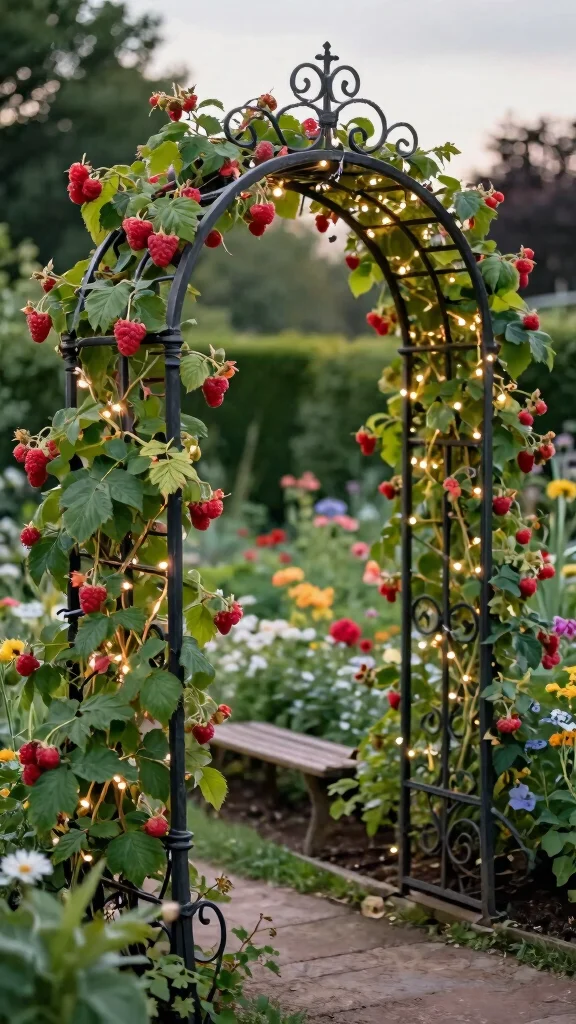
Want to elevate your garden’s aesthetic? An arched trellis can be the stunning focal point you’re looking for. This elegant design frames your raspberry bushes beautifully and can be crafted from wood or metal.
When installing an arched trellis, make sure it’s tall enough for your plants to grow comfortably. You can enhance its appeal by adding climbing flowers or vines and even hanging lights for a magical evening atmosphere.
Tips:
– Ensure the trellis is anchored securely to withstand wind.
– Include extra support if the arch is particularly tall.
– Decorate the arch with seasonal flowers for added charm.
This design introduces a romantic element to your garden, making it truly special.
5. DIY Pallet Wall Trellis
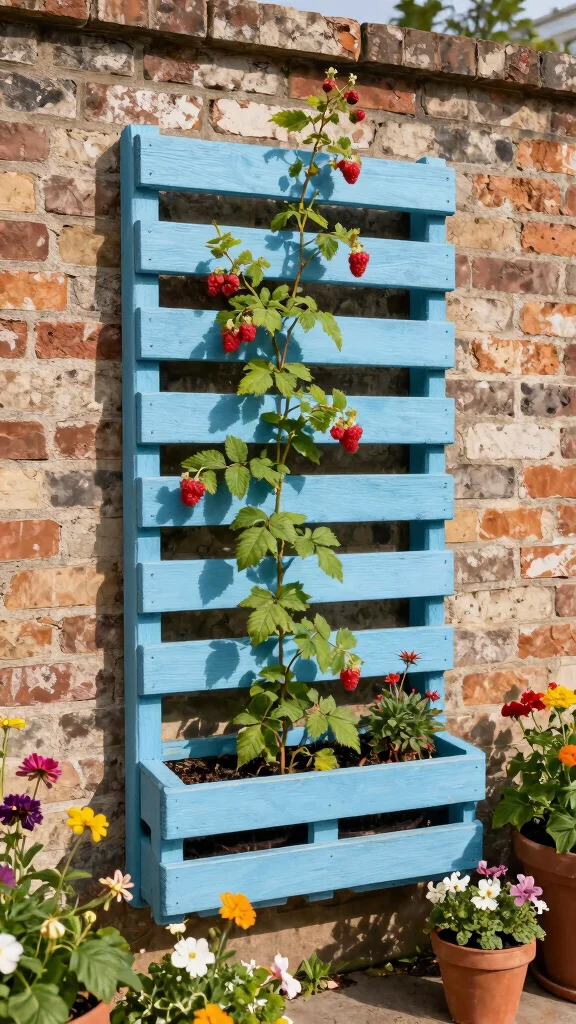
Transform an ordinary wall into a vertical garden with a DIY pallet wall trellis. This creative solution not only provides support for your raspberries but also enhances your garden’s aesthetics.
By attaching pallets directly to your wall, you can efficiently utilize every inch of space available. Paint the pallets for a pop of color or leave them rustic for a farmhouse charm.
Tips:
– Ensure the wall can support the pallet.
– Use strong screws to secure the pallet to the wall.
– Regularly check for loose supports as your plants grow.
This method combines functionality with aesthetic appeal, making your garden a standout feature.
6. Vertical Garden Planters
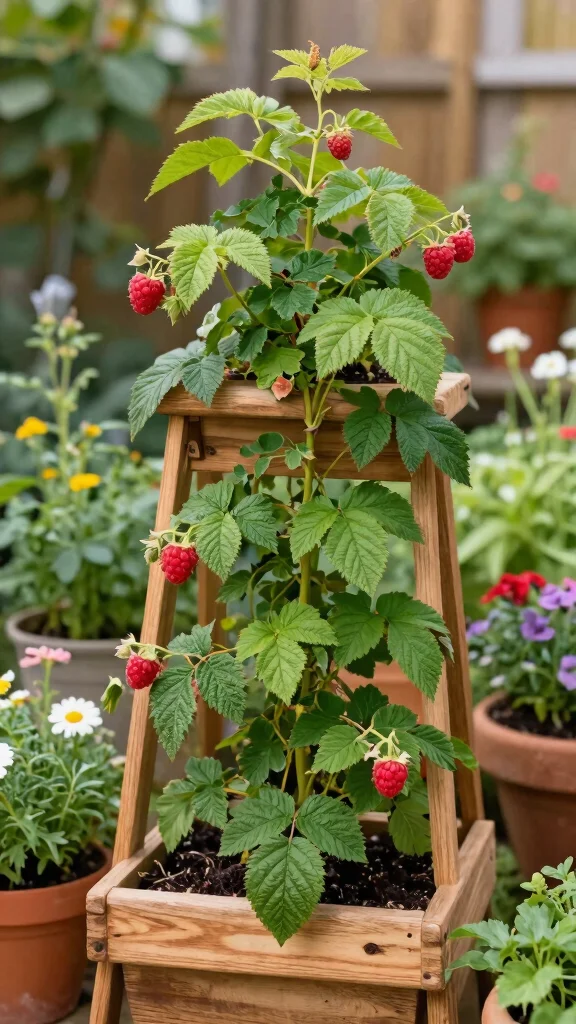
Want to create a lush garden without taking up too much ground space? Vertical garden planters are the perfect solution. These planters allow your raspberry plants to flourish upwards, making them ideal for limited areas.
You can choose from tiered planter racks or wall-mounted options. Just remember to position them where your raspberries can receive plenty of sunlight. Adding herbs or smaller flowers in the lower planters can maximize productivity.
Tips:
– Ensure proper drainage in your planters.
– Use quality potting soil for best results.
– Rotate your plants occasionally for even sun exposure.
This design saves space while providing a striking visual element to your garden.
Vertical garden planters turn tight spaces into productive berry beds. A raspberry trellis climbs up, freeing ground space while boosting sun exposure and yields. Pro tip: stack herbs or small flowers in the lower planters for a busy, productive setup.
7. Fence-Trellis Combo
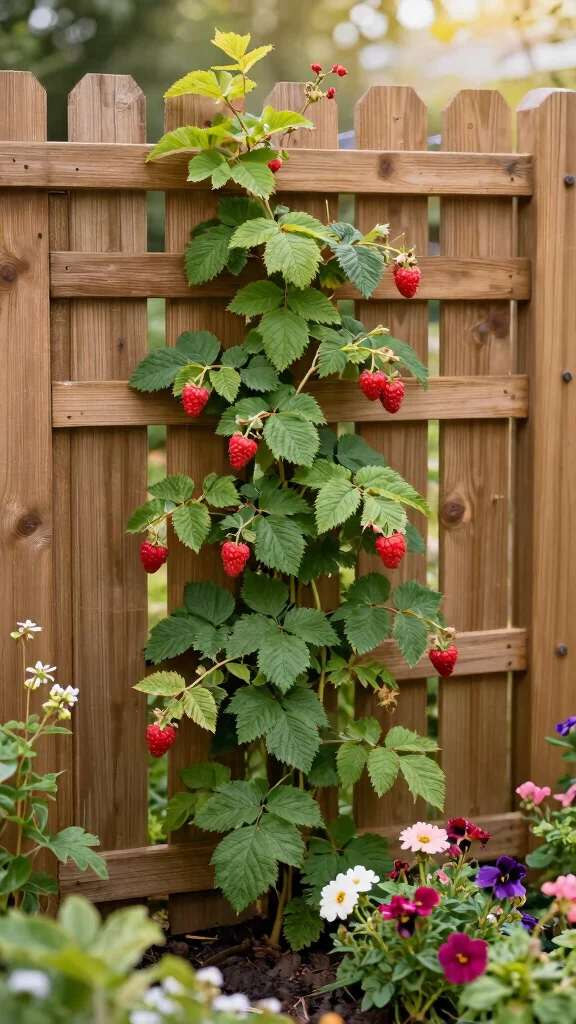
Looking for a creative way to blend function and style? A fence-trellis combo is a smart choice. By utilizing your existing fence as a support system, you can easily add horizontal slats or wire for a trellis effect.
This approach not only saves space but also enhances the overall look of your outdoor area. Raspberries can grow along the fence, receiving extra support and protection from the wind.
Tips:
– Choose a fence material that complements your garden style.
– Ensure the trellis additions are sturdy enough to handle plant weight.
– Regularly prune and train the raspberry plants along the fence.
This combination maximizes your gardening efforts while keeping your plants thriving.
8. Obelisk Trellis
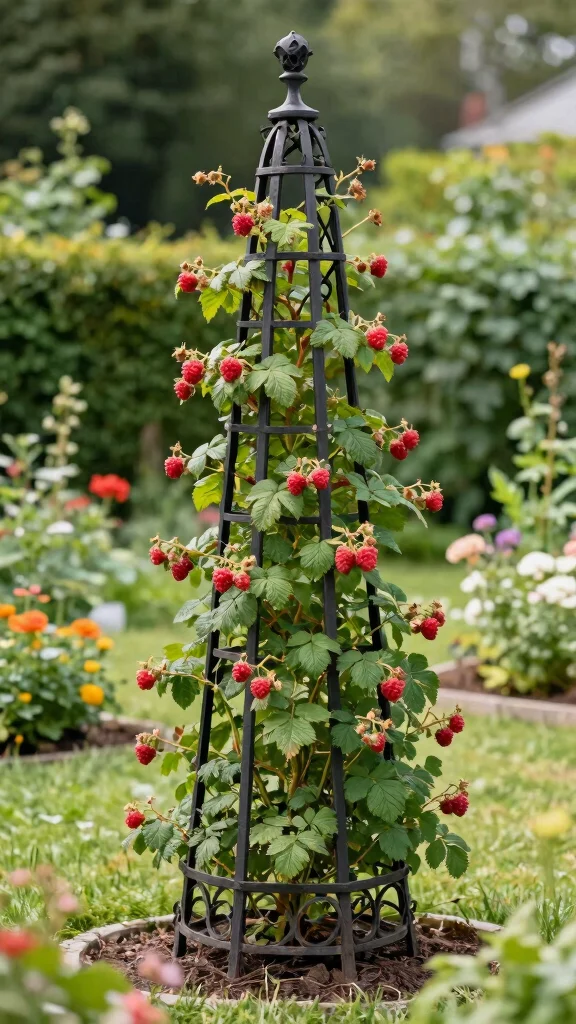
Want to make a statement in your garden? An obelisk trellis adds a sophisticated touch. This tall, tapered design draws the eye upward and serves as an impressive focal point.
Obelisk trellises, typically made of wood or metal, are perfect for small spaces since they allow for vertical growth without taking up much ground area. Train your raspberry plants to climb the obelisk, creating a stunning vertical oasis.
Tips:
– Choose a sturdy obelisk that can withstand strong winds.
– Ensure proper anchorage at the base.
– Incorporate colorful flowers at the base for added visual appeal.
This trellis enhances your garden’s elegance while encouraging healthy growth for your raspberries.
9. Easy DIY PVC Trellis
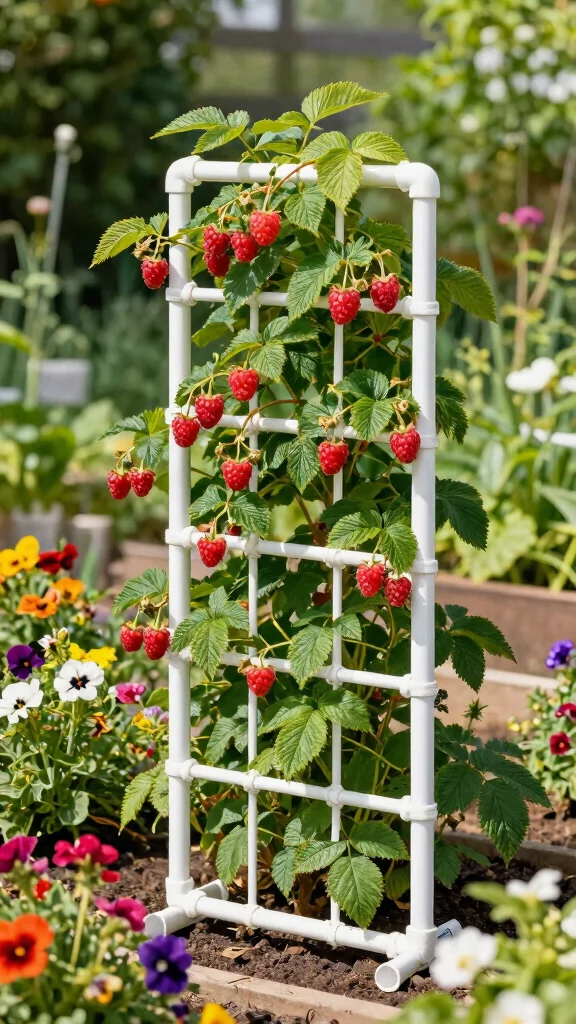
Looking for an easy and affordable garden solution? A DIY PVC trellis ticks all the boxes! This lightweight material is perfect for small gardens and can be customized to your desired height.
Simply cut the PVC pipes to size, join them at the corners, and secure them into the ground. Use netting or twine for your raspberries to climb, and enjoy a weather-resistant trellis that keeps your garden stylish through the seasons.
Tips:
– Use U-shaped stakes to anchor the trellis securely.
– Choose white PVC for a clean, modern look.
– Regularly check for any wear and replacement needs.
This design is ideal for beginners and budget-conscious gardeners alike.
10. Minimalist Metal Trellis
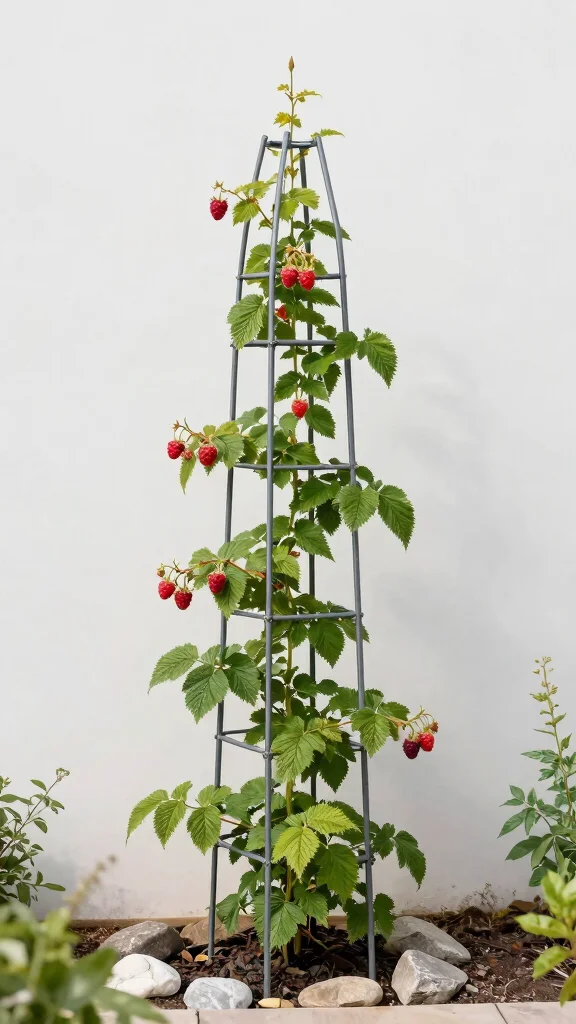
If you appreciate sleek and modern design, a minimalist metal trellis can elevate your garden’s look. Using thin metal rods, this trellis provides a clean, unobtrusive way to support your climbing raspberries.
Its simplicity allows it to blend effortlessly into any garden landscape, and when placed strategically, it can also serve as an artistic element. Just ensure the metal is treated to prevent rust for longevity.
Tips:
– Choose a color that complements your existing garden decor.
– Anchor the base deeply for stability.
– Regularly clean the metal surfaces to maintain its sleek appearance.
This design not only saves space but also adds an artistic touch that will impress your guests.
❝Minimalist metal trellis proves that small gardens can dream big. A slim frame keeps your raspberry trellis tidy and easy to prune, while adding modern style that blends with any landscape. Remember: choose rust-treated metal for longevity and effortless blooms.❞
11. Decorative Trellis with Hanging Planters
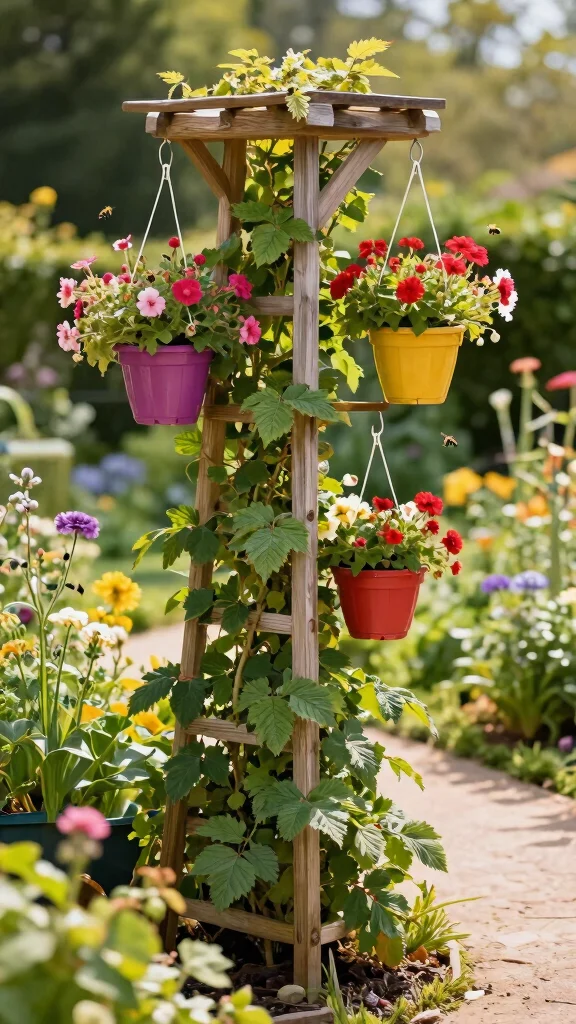
Why not combine beauty with function? A decorative trellis featuring hanging planters allows you to maximize vertical space while adding vibrant color to your garden. This design incorporates not just support for your raspberries but also pots for flowers or herbs that dangle from the trellis.
This dual-purpose design enhances your garden’s visual interest and diversity. Choose vibrant flowers that attract pollinators, boosting your garden’s ecosystem.
Tips:
– Ensure the hanging planters are lightweight to prevent sagging.
– Select plants that thrive in similar conditions to your raspberries.
– Regularly water both the trellis plants and the hanging flowers.
This creative approach offers a beautiful solution while keeping your garden functional.
Fun fact: A decorative trellis with hanging planters can add up to 25-35% more usable gardening space for a raspberry trellis in small gardens. That extra height also attracts more pollinators with vibrant flowers.
Conclusion
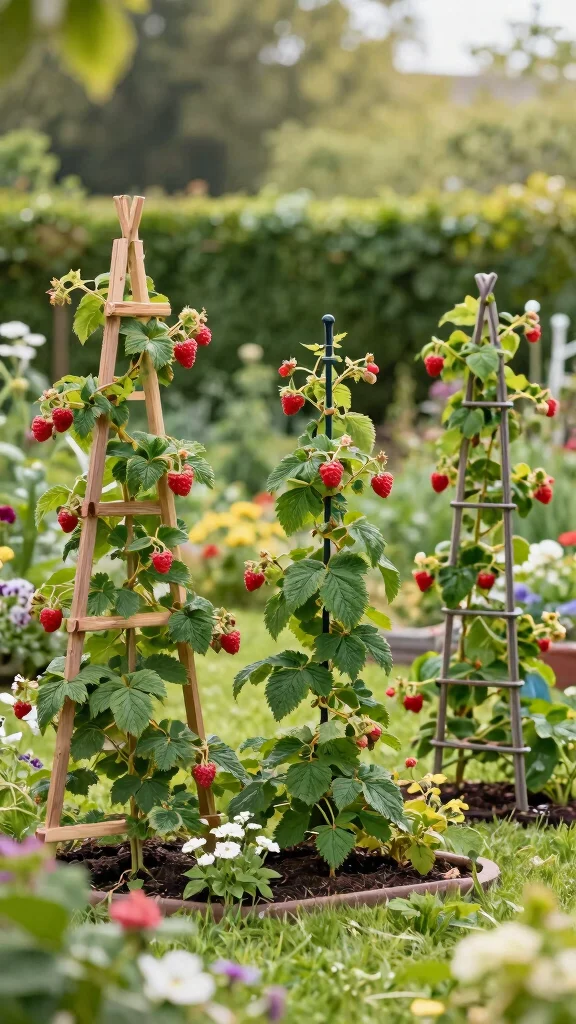
Creating a vertical raspberry trellis not only enhances the beauty of your garden but also optimizes your growing space.
From classic wooden designs to modern metal structures, the possibilities are endless. Implementing these ideas will give your raspberry bushes the support they need while allowing your garden to flourish in unique ways. Choose what resonates most with your style and space, and watch as your small garden transforms into a berry paradise.
Note: We aim to provide accurate product links, but some may occasionally expire or become unavailable. If this happens, please search directly on Amazon for the product or a suitable alternative.
This post contains Amazon affiliate links, meaning we may earn a small commission if you purchase through our links, at no extra cost to you.
Frequently Asked Questions
What is a raspberry trellis and why do I need one in a small garden?
A raspberry trellis is a vertical support system that trains the raspberry canes upward. It keeps berries off the ground, improves air circulation, and makes harvesting in a compact space much easier. With vertical gardening, you can fit more berry bushes into a small garden than you could with sprawling plants. A simple setup to start: install two sturdy posts 6 ft tall, about 6–8 ft apart, and run one or two horizontal wires at 2 ft and 4 ft high. Use soft plant ties or garden twine to secure canes as they grow. For DIY trellis design, a basic two-wire system or a lightweight lattice works, but choose materials that won’t corrode in your climate. Regularly train new shoots and prune after harvest to keep the structure neat and functional. This is the heart of raspberry trellis and fruit bush support in tight spaces.
How can I build a vertical raspberry trellis on a budget?
Start with simple, affordable materials. A two-wire Florida weave or a repurposed cattle panel trellis are great options. Use weatherproof posts (or sturdy stakes) and inexpensive wire or sturdy string. Step-by-step: 1) mark a straight line and install two posts 6–7 ft apart. 2) fasten a bottom wire about 6–12 inches from ground and a top wire 4–5 ft high. 3) space wires evenly and secure with staples/eye screws. 4) train canes to weave along the wires as they grow, using soft ties. 5) anchor the trellis to prevent wobble. For a truly budget-friendly option, attach lattice panels to a fence or build a minimal framework from reclaimed lumber. Regularly check knot and wire tension and replace any rusted components. A DIY trellis design on a budget can still deliver strong fruit bush support and keep your raspberry trellis productive.
What are the best DIY trellis designs for berry bushes like raspberries?
Here are a few effective designs you can build this weekend: 1) Florida weave — two wires run between posts and you weave the canes between them for a flexible, strong support. 2) T-bar or cross-arm trellis — a horizontal bar at the top with a couple of supporting wires creates a clean vertical line for arching canes. 3) Cattle-panel or lattice trellis — lean a salvaged panel against a fence or frame to create a roomy vertical growing space. For small gardens, a fence-mounted or wall-mounted design saves space. Each design supports strong raspberry trellis growth and makes berry plant care and harvest easier. Pick a design that matches your space, climate, and the vigor of your raspberry varieties.
How do you maintain berry plant care with a raspberry trellis?
Maintenance is about training, pruning, feeding, and protection. In late winter, prune to remove old canes that produced fruit last year and leave 4–6 strong new canes per plant for next season’s harvest. Tie new growth to the trellis with soft ties, spacing evenly along the wires for better air flow. Water deeply during dry spells and mulch to conserve moisture and suppress weeds. Use a balanced fertilizer following package directions as part of your gardening tips for fruiting plants. Watch for pests and diseases; early signs like yellowing leaves require action. Netting can keep birds off berries. With proper berry plant care and an orderly raspberry trellis, you’ll see cleaner fruit and healthier plants.
Can a raspberry trellis maximize fruit production in a small garden?
Absolutely. A raspberry trellis concentrates canes and fruiting zones, making the most of vertical space in a small garden. By training canes to a single plane, you improve sun exposure and air flow, reducing shade and disease. Choose sturdy erect varieties and set your trellis at a comfortable height so you can reach the berries without bending too much. Regular pruning, proper spacing between plants, and consistent berry plant care all help boost yields. A well-built raspberry trellis is a simple, high-impact way to expand production in tight spaces and keep your vertical gardening goals on track.
Related Topics
raspberry trellis
vertical gardening
DIY trellis design
fruit bush support
small garden ideas
easy gardening
berry plant care
space-saving gardening
beginner friendly
sustainable gardening
organic berry growing
seasonal gardening tips